
Article by

Topics

One platform to manage the entire IT device lifecycle
GET STARTEDThe IT infrastructure of today’s average company has become far more complex than in years past.
As such, enhancing IT system performance and ensuring business success requires a strategic, all-encompassing approach to infrastructure management.
The overarching process that covers all key areas is IT infrastructure optimization.
What is IT Infrastructure Optimization?
Most of today’s companies have robust system architectures, which can include:
- Physical assets like hardware and servers
- Cloud services like data storage and SaaS platforms
- Software and applications
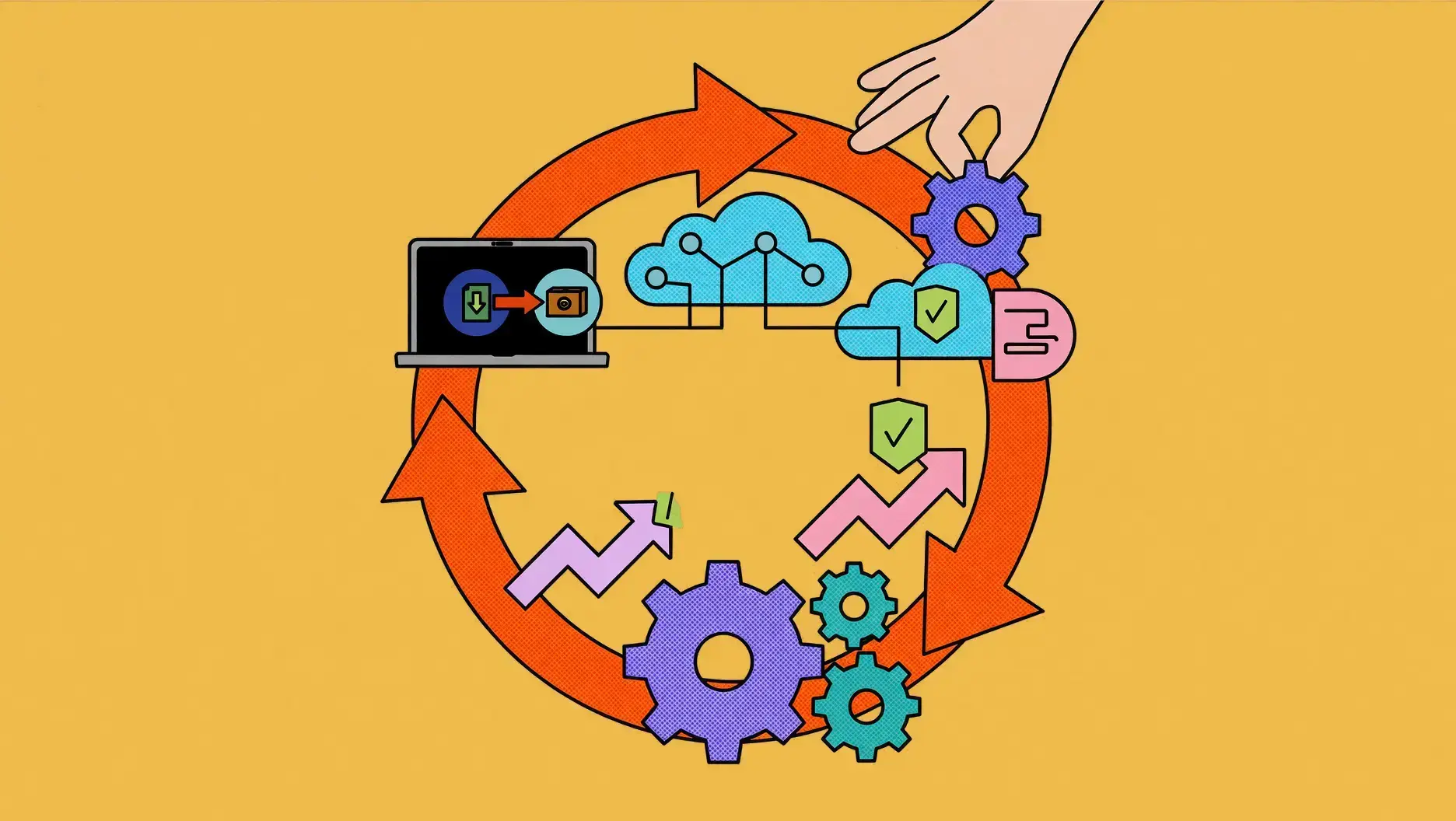
Optimizing IT infrastructure involves using a holistic process to continually refine and improve the performance of existing infrastructure, as well as any other IT assets added to your network later.
Some simple examples include:
- Upgrading hardware and software to eliminate inefficiencies
- Using automation tools to boost productivity and accuracy with less manpower
- Streamlining what have historically been meticulous processes like push updates and data backups
- Pinpointing and improving wasteful areas to reduce overall cost
The purpose of an optimization strategy is to:
- Decrease infrastructure complexity
- Improve resource utilization
- Create greater operational efficiency
- Reduce infrastructure cost
- Ramp up security by reducing cyber threats
- Ensure compliance
- Improve business performance
Note that infrastructure optimization isn’t a one-off project, but rather, an ongoing iterative process that evolves along with your business. Therefore, when beginning your journey, it’s important to have the mindset that it will grow and change over time.
Key Components of IT Infrastructure Optimization
Hardware and Physical Infrastructure
This can include any devices your employees use, like monitors, laptops, mobile devices, accessories, and peripherals. It can also include larger-scale assets like servers, data storage devices, and data center power systems.
Basically, any type of physical IT asset would fall under this category.
In terms of optimization strategies, one of the most common is identifying assets within your hardware infrastructure that are either outdated or underutilized.
From there, you figure out what should be updated, scaled back, or, in some cases, eliminated to achieve better infrastructure optimization.
Another key component is IT asset lifecycle management, which involves streamlining the end-to-end process of overseeing assets from start to finish.
For instance, the typical asset lifecycle for most businesses looks something like this:
- Procurement
- Deployment
- Management
- Storage
- Retrieval for reselling, recycling, or disposal
Using software or services like allwhere allows you to move seamlessly from stage to stage to eliminate bottlenecks, while simultaneously enhancing performance, security, and compliance.
That way, you can build a solid foundation for securing physical assets, establish smooth workflows as assets move throughout their lifecycle, and get the most from your investments for greater cost efficiency.
Network and Cloud Infrastructure
This refers to digital assets that connect systems and enable fluid communication throughout your organization.
Some examples of network infrastructure include internet connections, Wi-Fi networks, and VPNs that allow for secure connections.
As for the cloud, this refers to any cloud-based service or platform, such as data storage, SaaS products, and digital security.
The main purpose of network and cloud infrastructure optimization is to increase the speed, efficiency, and reliability of cloud computing, while reducing total cost.
When it comes to specific strategies for accomplishing this, a critical best practice is analyzing network traffic to understand how data moves throughout your IT network.
From there, it’s a matter of identifying inefficiencies and resolving them to prevent bottlenecks and stop any particular systems from being overwhelmed.
And just like with hardware and physical infrastructure optimization, cloud optimization also relies heavily on right-sizing, where you eliminate underutilized cloud products and continually strive to build a network that perfectly matches your current demand.
That way, you can better control your cloud cost and scale with fewer disruptions.
Software and Application Optimization
This can involve any type of business software used in operations, such as productivity platforms, CRMs, project management tools, and disaster recovery planning software.
In terms of size, this can range from the extremely small-scale, like software or applications for small startups, all the way to large enterprises with hundreds of employees.
This area of optimization has four main goals.
- Identify inefficiencies that are slowing or hindering IT performance
- Automate whenever possible
- Enhance integration between platforms
- Improve security and compliance
For example, for goal number one, you may rigorously monitor the performance of your software and applications to look for issues like slow response time and higher-than-average latency.
For goal number two, you may switch outdated legacy systems to newer, more efficient ones that leverage technology like automation, machine learning, artificial intelligence, and generative AI to better meet your business goals.
For goal three, you may check how well different software and apps communicate with one another and switch out platforms that have poor integration capabilities with platforms that offer comprehensive integration.
And for goal four, you may develop more streamlined processes to ensure software remains up-to-date and proactively fix security vulnerabilities before they have the chance to be exploited.
Benefits of Optimizing Your IT Infrastructure
Let’s start with the benefit that most businesses are most interested in — reduced cost.
By consolidating or eliminating IT assets and reducing inefficiencies, this often results in lower operational costs. And this is helpful on many levels, as it can help you achieve a better ROI when spending on hardware, cloud resources, software, and many other assets.
Next, there’s better IT performance and efficiency. By continually optimizing and iterating based on the data you generate, you can create better workflows and make cloud technology and software work faster.
You should also experience less downtime and fewer disruptions, which not only leads to more effective IT infrastructure management but also creates a better employee and customer experience.
There’s also better asset management and resource allocation. By taking a strategic approach to optimization, you’ll almost always be in a better position to stay on top of IT inventory and efficiently distribute IT assets to your team members.
Not to mention, you’ll likely have better visibility of the assets within your network. This is important for all businesses, but it’s especially vital for those with a large remote/hybrid workforce, with employees scattered around the country or globe.
Increased security and compliance are another huge benefit.
By taking steps to fix outdated systems, addressing vulnerabilities, and safeguarding sensitive data, you can significantly reduce your risk and better maintain compliance standards — something that’s especially critical in high-risk industries like finance and healthcare.
Finally, you can often expect a boost in brand equity, as all of these benefits can come together to improve your decision-making and overall reputation within your industry.
IT Infrastructure Optimization Strategies That Work
Typically, you’ll want to start with increasing the visibility of your IT network, as transparency is an integral part of IT asset management best practices.
A platform like allwhere, for instance, lets you see all of the devices within your network, including which employee has what, where devices are located, what’s in storage, what’s in transit, and more.
This is a critical starting point for optimization because it 1) gives you a bird’s-eye view of what you have and 2) lets you continually observe everything in real-time as changes are made.
That way, you can consistently monitor your assets, follow usage patterns, and pinpoint issues that need your attention so you’ll know what to prioritize.
This brings us to our next strategy — an extensive audit of your current IT infrastructure, including:
- Hardware
- Cloud infrastructure
- Data storage
- Disaster recovery
- Software and applications
- Legacy systems
- Overall cost
Once you have adequate data, you’ll want to find underperforming areas, inefficient workflows, rarely used subscriptions, and any other friction points and systematically resolve them for performance optimization, better resource allocation, and greater cost control.
Another big strategy is automation. Regardless of how efficient your business workflows currently are, you’re almost guaranteed to have meticulous, repetitive tasks somewhere in the pipeline that could be streamlined through automation.
Whether it’s automatically scheduling system updates, performing backups, or any other task, this is an aspect of information technology infrastructure that can be improved with automation, while at the same time increasing accuracy by reducing the potential for human error.
Also, many businesses can benefit from cloud migration because this can be instrumental in making your company more scalable with less reliance on physical assets.
And as digital transformation increasingly becomes the norm, this should keep your company in the thick of things from a competitive standpoint.
Common Challenges in IT Infrastructure Optimization
One of the main cases for optimizing an IT infrastructure is to reduce complexity. But ironically, the process for executing changes can create added complexity (at least initially).
For instance, trying to make legacy systems, new cloud computing platforms, and software development sync smoothly is often easier said than done.
That’s why success requires a clear game plan, agreement among key stakeholders, and a phased structure throughout the transition.
Another big challenge is the initial budget required for optimizing an IT infrastructure. In many cases, there will be a long-term payoff and a substantial cost saving.
But paying for new hardware, cloud computing platforms, data analytics, and so on can create financial hardships for many businesses at first.
Besides that, there may be security concerns if you’re migrating a large volume of sensitive data from one area to another.
Finally, it’s common to experience pushback from some employees, as they may be reluctant to use new technology in their day-to-day workflows. And when it comes to technology like automation and AI workloads, some may feel threatened by their job security.
The Bottom Line
Strategically optimizing your IT infrastructure can offer a host of great benefits, including better IT system performance, less downtime, lower cost, smarter resource allocation, and increased security and compliance.
But to fully meet your business needs, the process requires careful planning and the ability to navigate around some sticky challenges.
If you’re looking to optimize IT asset lifecycle management, consider allwhere. We handle everything from procurement to deployment — all while protecting sensitive data every step of the way.
So if you want to automate the device lifecycle for a truly hands-off logistics experience, we’d love to help. You can get started here.
