
Article by

Topics

One platform to manage the entire IT device lifecycle
GET STARTEDA crucial yet sometimes overlooked stage of the IT asset lifecycle is retirement.
Handling this stage correctly is important for maintaining tight data security, ensuring regulatory compliance, and getting the most value from your IT budget.
Below, you’ll find everything you need to know to approach IT asset retirement efficiently and strategically.
What is IT Asset Retirement?
The IT asset lifecycle is a lengthy one. It starts with procurement and deployment, then moves on to operation and maintenance. And finally, there’s retirement, where equipment has reached the end of its useful life.
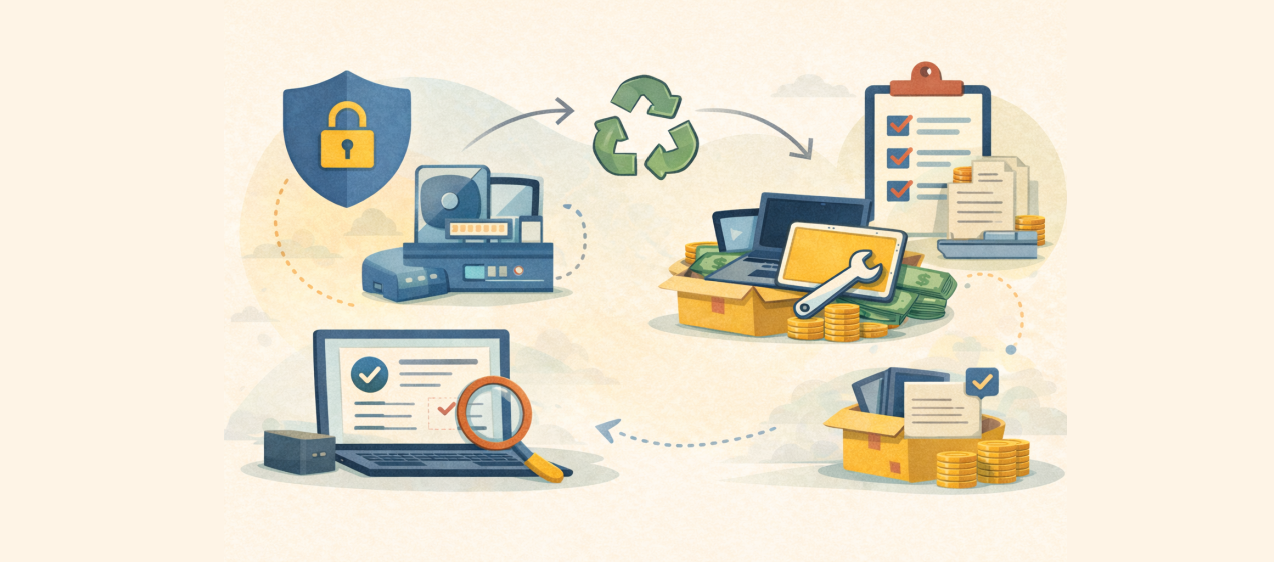
It’s at this point that it’s time to retire equipment, which can involve a few options.
- Reselling on a secondary market to boost cash flow
- Recycling parts that are still usable
- Donating to a worthy cause
- Disposing of assets through physical destruction
Note that there’s more to it than simply getting rid of outdated IT equipment, and there are three key critical areas to take into account.
First, there’s security, where techniques like media sanitization and data destruction are used to efficiently wipe existing data from devices (more on this later).
Next, there’s industry standard compliance, where you ensure that you verify secure data destruction, maintain a paper trail for accountability, and follow relevant privacy regulations like the GDPR and HIPAA.
Finally, there’s adhering to environmental regulations to ensure that the disposal of outdated technology is done responsibly and in accordance with sustainability initiatives to prevent electronic waste.
Planning for Asset Retirement: How to Prepare for Decommissioning
Estimate Retirement Costs
At the end of the day, the main goal of asset replacement should be to keep your employees supplied with the right IT assets to optimize their performance while maximizing your overall IT ROI.
So, before retiring assets, it’s important to calculate what the estimated costs will be so your finance team can budget more effectively and not get hit with any unanticipated curveballs on your balance sheet.
Some examples of retirement costs can include:
- Media sanitization
- Shipping
- Logistics
- Resale expenses
- Recycling or disposal fees
- The cost of labor
And if you’re using IT asset management services rather than doing it in-house, you’ll need to factor in the cost of that as well.
Consider the Timeframe
Another key part of a seamless asset retirement process is decommissioning equipment without disrupting workflows. To accomplish this, it’s helpful to have a clear timeline in place so you know how long to expect the process to take from start to finish.
For example, you could create a timeline that looks something like this:
- Notifying employees and stakeholders in your organization that asset retirement needs to take place
- Retrieving assets
- Performing a data backup for information you need to retain
- Performing data sanitization
- Updating records in case of audits
- Executing final disposal
That way, everyone should be on the same page during the refresh cycle, and there should be minimal downtime for better operational performance.
Media Sanitization
Any time an employee uses equipment like a laptop, tablet, or mobile device, there will inevitably be sensitive asset data that, if exposed, can potentially leak critical information.
Besides simply posing a security risk to your organization, it can also create compliance issues, where you could potentially be hit with fines, as well as suffer reputational damage.
That’s why any device containing sensitive data should undergo media sanitization before it changes hands, with some examples being data wiping, degaussing, and physical destruction.
IT Asset Disposal and Disposal Compliance
With electronic waste being such a major problem today, there are strict sustainability regulation initiatives in place to ensure IT assets are properly disposed of once their useful life is over.
Meeting disposal standards is important for 1) doing your part in being responsible during disposal and 2) protecting your organization from legal issues and/or financial penalties.
Typically, the best way to follow standards is to either partner with a certified recycler that adheres to relevant electronic waste laws in your area or outsource asset retirement to a third-party provider like allwhere that specializes in IT asset disposal services.
Records Update and Reporting
As we mentioned before, it’s important to maintain an accurate paper trail of assets at all times in case you’re ever audited. So whenever you officially retire an asset, you should update your company’s internal database to indicate that it’s no longer being actively used.
Here’s some specific information you’ll want to record:
- The type of device (monitor, laptop, mobile device)
- Serial number
- Warranty expiration
- Decommission method
- Destruction method (for physical destruction)
- Who was in custody of the asset at the time of destruction
Challenges in IT Asset Retirement
Lack of Visibility and Inaccurate Inventory
If businesses lack a centralized database for IT assets, it can be incredibly difficult to know what inventory is available, what stage of life equipment is in, and when it’s time for asset retirement.
This often translates into poor visibility, and it’s almost impossible to maintain accurate inventory, especially for larger teams that are scattered around the world.
When this happens, it can lead to a poor use of IT asset resources, a lack of informed decisions, security vulnerabilities, diminished performance, and an added expense with overall IT operations.
Inefficient Asset Lifecycle Management Processes
When companies use outdated, manual, or generally inefficient asset lifecycle management processes, it negatively impacts asset retirement in three main ways.
One, without using automation tools or IT management services, it tends to lengthen the asset retirement process.
Two, it creates a security risk and increases the potential for compliance issues.
Three, it can lead to an added cost during asset retirement, from paying for more labor hours, having to go back to correct mistakes, and paying penalties if data breaches or failing to comply with industry standards occur.
Complex Regulatory Requirements
When it comes to asset retirement regulations, organizations have to navigate a gauntlet involving data protection, privacy, and environmental sustainability regulations.
If there’s a lack of compliance, this can lead to costly penalties and put you at an increased risk of reputational damage.
For the average business, understanding and adapting to continually changing regulatory requirements can feel overwhelming, which is why many choose to partner with a third-party provider for IT procurement services, as well as for IT management and retirement.
Data Security and Compliance Risks
This overlaps with the previously mentioned challenges.
Again, issues such as poor inventory data visibility, inefficient asset lifecycle management processes, and challenging regulatory requirements can all combine to create security and compliance risks that can pose major problems for modern IT-driven companies.
And if data housed within devices isn’t properly sanitized or destroyed, this greatly increases the chance of a data breach and all the headaches that come along with it.
Remote Asset Management
With worldwide teams being the norm for many businesses, managing the logistical complexities of retrieving assets can also present an immense challenge.
This is especially true for larger teams with dozens or even hundreds of employees that need to routinely do employee offboarding, asset refreshes, or device recalls.
Tasks like coordinating returns, monitoring shipping updates, and verifying data sanitization when workers are on the other side of the world can be incredibly tricky when done in-house.
That’s why many opt to partner with a professional third-party provider for key tasks like equipment retrieval and enjoy the built-in value and support that come along with this arrangement.
Retire IT Assets the Smart Way with allwhere
Having a streamlined asset retirement process is critical on many levels. But as we’ve learned, the inherent challenges that come along with it can present serious challenges, especially for larger companies with distributed workforces.
That’s where allwhere comes in. We specialize in end-to-end IT asset lifecycle management, with asset retirement being a key focal point.
One of our main offerings is our streamlined IT Asset Disposal Service, which makes it easier than ever to sell, recycle, or dispose of your aging laptops, tablets, and smartphones..
allwhere handles all of the logistics while keeping you in the loop every step of the way, to save you time, reduce your workload, and provide much-needed operational relief for maximum value.
Get in touch with allwhere today to discuss your company’s specific asset retirement needs.
