
Article by

Topics

One platform to manage the entire IT device lifecycle
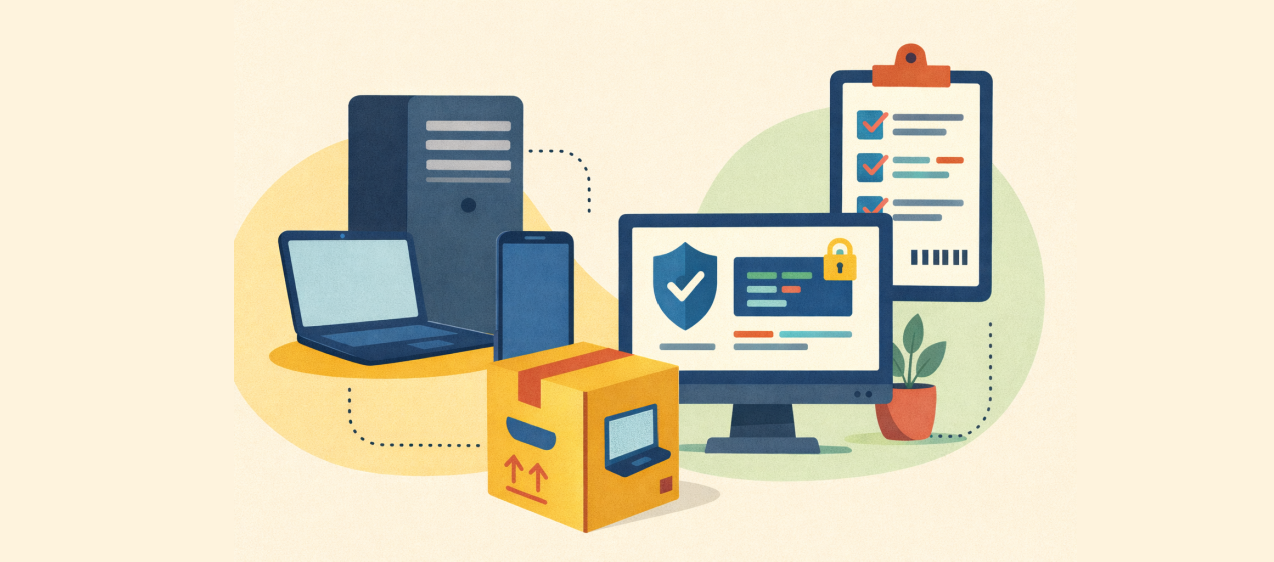
GET STARTEDFrom computers and servers to mobile devices and accessories, providing your employees with the right IT hardware is a must. To accomplish that, you need an efficient, scalable procurement process that covers all the angles.
Here, we’ll discuss what’s involved with IT hardware procurement, the different types of procurement, core challenges, and more.
What is IT Hardware Procurement? And Why it Matters
There are four main components — identifying hardware requirements based on your business needs, evaluating vendors, sourcing hardware assets, and purchasing equipment.
Hardware procurement matters because it:
- Provides your team with the necessary hardware solutions to support business operations
- Minimizes operational costs
- Increases employee productivity
- Enhances data security
- Facilitates efficient business scaling
The IT Hardware Procurement Process: Step-by-Step
The key to effective IT hardware procurement is building a customized workflow that’s specifically tailored to your existing infrastructure. While each company is a little different, here’s a procurement process that should work across the board.
- Identify your exact needs to determine which specific equipment you need (computers, servers, mobile devices, etc.), the quantity of new devices you need, what roles they’re for, and what the projected hardware lifecycle is.
- Set a concrete number for your budget so you know how much you can realistically spend on hardware assets.
- Research multiple vendors to determine reputation, cost, warranties, and asset management support.
- Obtain at least three quotes and compare them with key stakeholders (ask about volume discounts if you have extensive hardware needs).
- Purchase equipment assets and identify when devices will be deployed into existing systems.
- Track each purchase order from beginning to end so you always know who owns what, when assets are in storage, and their location.
- Receive equipment and inspect each device before beginning employee onboarding, checking for defects and other issues.
And while it’s not part of immediate procurement, it’s also important to develop a strategy for device and IT vendor management. For example, you’ll want to take things like maintenance, upgrades, troubleshooting, repairs, and warranty claims into account as part of your workflow.
That way, you should be in a position to maximize the lifespan of each device and swiftly resolve any issues that arise through smart asset management.
Types of Hardware Procurement for Modern Businesses
Hardware types can be broken down into four main categories.
First, there’s equipment for end-users (e.g., employees). This can include desktop computers, laptops, monitors, keyboards, mobile devices, and peripherals like printers and docking stations.
Next, there’s network hardware that’s used to build an IT infrastructure. Routers and switches are common examples of networking equipment.
Third, there are servers and technical storage equipment, which are used to house your business data.
Finally, there’s security hardware, which can include firewalls, VPN gateways, and an intrusion detection system, which monitors your network to identify suspicious activity.
Security hardware is important for all industries, but it’s especially critical for high-risk industries like businesses in finance and health.
Because of all of the different potential combinations of devices involved in the IT hardware lifecycle, it will likely take time and experimentation to find the right hardware setup. And even then, continual iteration will be necessary to fully optimize your IT hardware inventory.
The key is to come up with a solid lineup and refine your asset management over time to improve your hardware procurement decisions and maximize efficiency.
Vendor Management and Building Strategic Partnerships
One of the biggest factors that determines the success of your hardware procurement process is vendor relationships.
Having strong relationships can impact how much you pay for information technology, fulfillment speed, service quality, overall efficiency, and more. So it’s something you want to give a lot of attention to.
Here are some helpful tips for optimizing vendor management and building strategic vendor partnerships.
- Always look for vendors that rank high in reputation, reliability, and have minimal downtime.
- Prioritize vendors that offer quick fulfillment and global delivery, as this is critical for getting hardware to remote or hybrid employees efficiently, to minimize disruptions.
- Choose a vendor that offers a centralized dashboard so you can seamlessly track and monitor your hardware inventory.
- Look beyond pricing and consider the overall level of service you get from a vendor.
Note that many organizations opt for IT procurement services to handle the process rather than doing it themselves. For example, allwhere offers robust IT hardware procurement services that eliminate the hassle of hardware procurement while ensuring seamless integration.
This starts with the wide network of vendors we partner with, which is what enables us to locate the exact equipment you need without being limited by one vendor’s inventory.
We also handle all aspects of logistics and communication to provide operational relief and a truly hands-off experience.
And we allow you to track everything conveniently from a single platform, so you always have a bird’s-eye view of what’s happening with your IT procurement strategy and can maximize your efficiency.
Common Challenges in Hardware Procurement and Solutions
For starters, many organizations end up going over budget with their hardware acquisition. This can be especially problematic when you’re doing this at scale, with dozens or hundreds of employees scattered around the world.
As we mentioned earlier, this is why it’s so important to have a concrete number with what you can spend and not deviate from it.
Another challenge is security.
Because of the sensitive data that’s often stored and transmitted on devices, especially in industries like finance and healthcare, poor security can lead to major vulnerabilities that, if exploited, can result in data breaches and the consequences that come along with them.
There are also supply chain disruptions. Whenever you’re unable to efficiently procure the devices you need — whether it be due to delays, shortages, or putting all of your eggs in one basket with a single vendor — this can create serious problems.
That’s why most businesses can benefit from using an indirect procurement service like allwhere, which isn’t reliant on just one vendor.
Lastly, there’s the issue of tracking. Unless you’re operating out of a single in-house location, you’ll likely have devices being shipped to employees. And in many cases, this is done globally.
Without a centralized tracking system, hardware assets may be lost or misplaced, or critical upgrades may be missed, compromising performance and security.
Best Practices for Efficient Hardware Acquisition
Start by prioritizing communication with key stakeholders to ensure you’re on the same page regarding hardware needs, rollout, and budget.
Next, make security a focal point at every stage of IT hardware procurement.
From choosing a vendor with a strong emphasis on security to selecting secure devices to pre-installing security software, this is integral to reducing vulnerabilities and avoiding the backlash that can stem from a data breach.
Once again, always be sure to monitor and manage all assets from a centralized platform so you always have maximum visibility, know what hardware is available, and can see where each device is in its lifecycle.
Be sure to stay on top of asset forecasts so you can accurately predict what your future needs will be, so you can keep up with demand and efficiently scale your operations.
Also, look beyond just the initial expenditure of IT hardware procurement and look at the total cost of ownership. Pay attention to factors like upgrades, warranties, and repairs so you can see the big picture to determine what your long-term ROI is like.
And because software procurement also plays a big role in your IT ROI, don’t forget to factor in the money you spend on software procurement as well.
How Procurement Services Streamline Hardware Buying
Because of the time, effort, and logistical complexities that come with IT hardware procurement, many organizations understandably find the process overwhelming or something they simply don’t have the bandwidth to deal with.
If you’re in this boat, outsourcing to a professional procurement team like allwhere is often the best move.
At allwhere, we offer global procurement that caters to worldwide teams, where we handle cross-border procurement, customs, security, and compliance, as well as communication and logistics, so you don’t have to.
And to streamline employee onboarding, we also handle device configuration, where we cover software procurement, app installation, and access control so your team can be quickly up and running.
If you’re looking for a truly hands-off experience where you get the right hardware to your team members without getting bogged down in countless manual tasks, this can be huge.
Another part of our core offering is that we provide an easy-to-use dashboard that lets you conveniently monitor your hardware assets so you never lose track of them. That way, you can be sure that each device reaches the right employee on time and that it’s always accounted for.
And with our pay-as-you-go model with no platform fees, you can get the exact level of service you want without overpaying while avoiding waste.
Wrapping Up
If your business uses IT hardware in any capacity, having a strong IT hardware procurement strategy is essential for keeping operations running smoothly.
Considering that it impacts employee productivity, data security, IT ROI, and more, you want to ensure you cover all your bases.
To learn more about how allwhere can take the hassle out of hardware procurement, reach out to speak with one of our experts today.
