

Article by

Topics

One platform to manage the entire IT device lifecycle
GET STARTEDAlthough remote work was growing before COVID, the pandemic dramatically increased the number of remote workers. Since then, the numbers have dipped somewhat, but a large number of remote teams remain.
Below, you’ll find a mix of government data and allwhere’s own unique industry research to better understand the modern remote workforce.
Key Remote Work Statistics
- Around 25% of employees worked remotely exclusively in 2026
- 52% of employees worked in a hybrid position
- 44% of remote employees had to purchase their own equipment at some point
- 24% of remote workers never returned employee-provided equipment
- 81% of remote employees used a personal device for work tasks, which creates a serious security issue
- 56% of workers said working remotely increased their productivity
How Many People Work Remotely?
Let’s start with one of today’s most common questions. Just how many people are part of the remote workforce?
To get a clear picture of remote work statistics, let’s look at a few top resources.
First, there’s global workplace analytics data from the US Bureau of Labor Statistics, which, as of May 2026, states that nearly 22% of the US employees worked remotely.
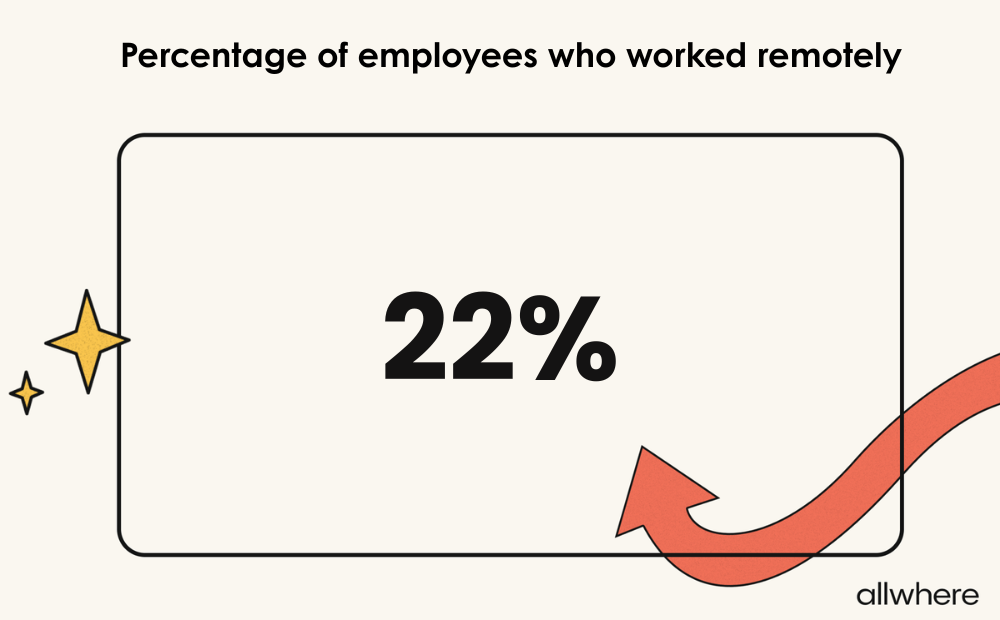
In terms of the exact number of Americans, this translates into roughly 34.5 million who teleworked in mid-2026.
Note that there has been a considerable change in remote employee numbers before, during, and after COVID.
Before COVID, the telework rate was much lower, at just 6.5%. At the height of the pandemic between April and December 2020, that number jumped to a staggering 50%.
Fast forward to 2024 and 2025, and that number has dropped by more than half to around 22%, which is where it has remained since, even with many companies implementing an RTO mandate.
Note that this US Bureau of Labor Statistics remote worker data refers to employees who exclusively worked remotely. If you’re interested in those who work hybrid positions, we’ll address that in the next section.
The bottom line is that pre-COVID remote work numbers were quite small.
Those numbers drastically increased during the pandemic and gradually leveled off to their current state of nearly one out of four employees working exclusively remotely in 2026.
Hybrid vs. Remote vs. On-Site
According to early 2026 Gallup flexible work data, 52% of employees did hybrid work, 26% worked exclusively remote, and 22% worked on-site.
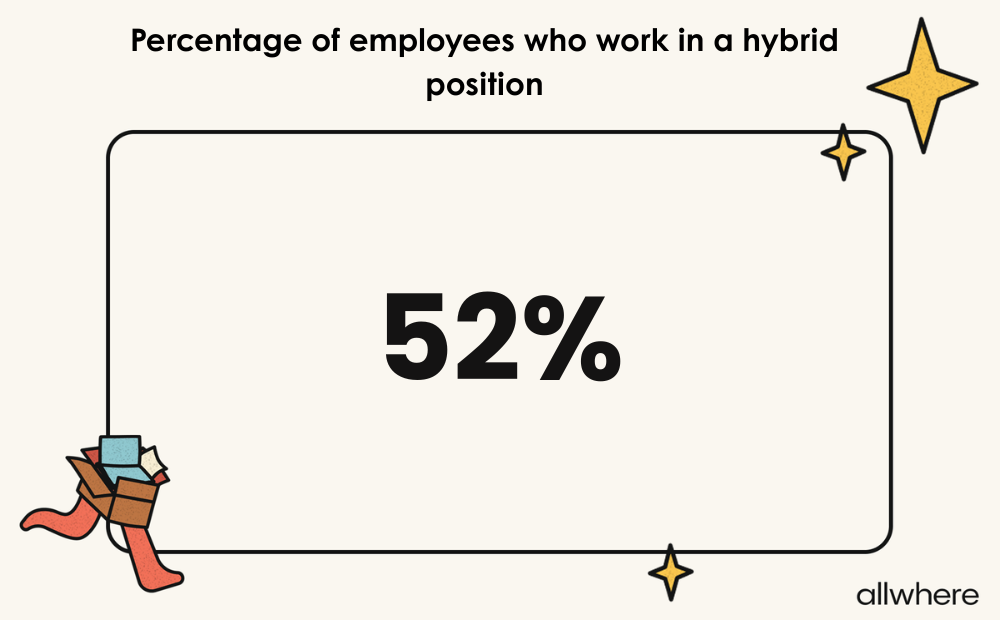
Note that Gallup’s exclusively remote worker statistic number is slightly less than the US Bureau of Labor Statistics data (26% vs 22%), but they’re in the same ballpark.
By these numbers, we can confirm that around a quarter of all US employees work exclusively remote, and just over half work hybrid.
Interestingly, both exclusively remote and hybrid workers exceed the number of on-site workers. Although this is a shift that many people saw coming, we can officially say that in 2026, more employees work remotely than they do on-site.
Another interesting observation is that many people now prefer hybrid flexible work or fully remote work, and only a small percentage prefer to work a traditional on-site position.
“Six in 10 employees with remote-capable jobs want a hybrid work arrangement,” Gallup writes. “About one-third prefer fully remote work, and less than 10% prefer to work on-site.”
Based on this employee data, it’s clear that a remote work opportunity and flexible work arrangements are now important for employee satisfaction — something modern employers should keep in mind when considering flexible work options for a better work life balance.
And if you’re creating job postings with a remote work option, be sure to let the job seeker know upfront that you have remote or hybrid positions, along with the specific work hours they can expect.
Are Employees Properly Supplied with Remote Work Equipment?
Next, let’s look at how well employers provide their remote teams with the equipment they need to perform their duties and maximize remote work productivity.
In our 2026 remote work survey, we asked remote workers if their employer provided all of the equipment they needed on the first day of their most recent remote role.
According to employee responses, 72% said yes, 27% said they were missing something, and 1% said they had almost nothing.
This shows that over a quarter of all remote employees lack key equipment to perform their remote job, which is problematic for onboarding and productivity.
Another question we asked was whether employees have ever bought their own work equipment because their employer’s was inadequate or didn’t arrive.
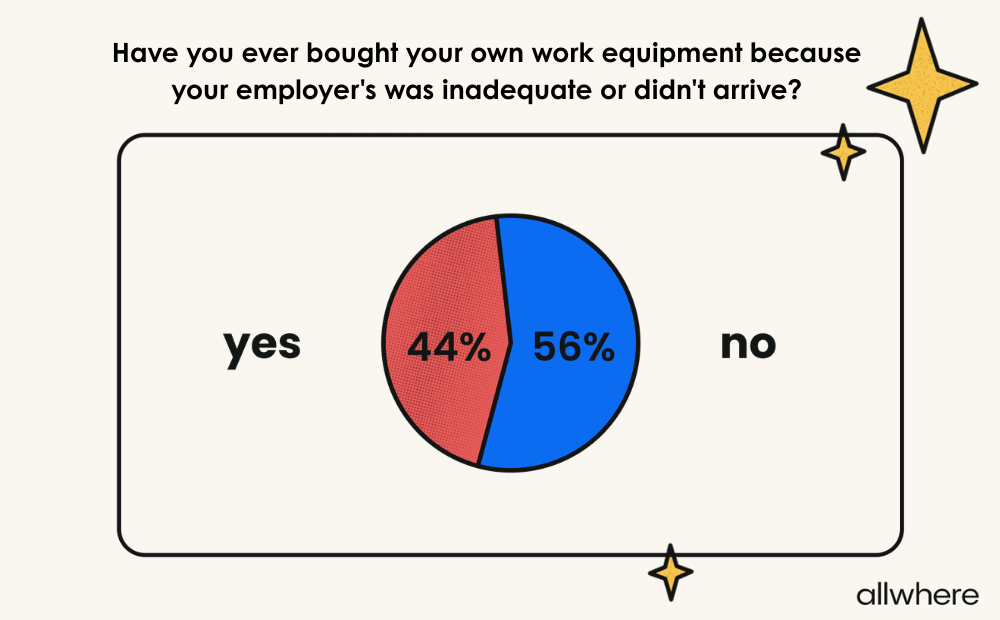
And we were a little astonished at the results, given that 44% of respondents said they purchased their own work equipment. Further, of the employees who answered yes to buying their own equipment, 40% said they were never reimbursed for their purchases.
This data suggests that many employers have room for improvement in providing remote teams with proper equipment and collaboration tools, and failing to do so could create friction with job satisfaction, productivity, and employee retention.
How Many Employers Fully Recover IT Assets?
As you probably know, supplying remote employees with IT assets can be costly. And if you have a larger team, it can add up quickly.
Therefore, it’s important to have streamlined offboarding and IT asset recovery workflows in place. But according to our WFH research data, this is an area where many employers are lacking.
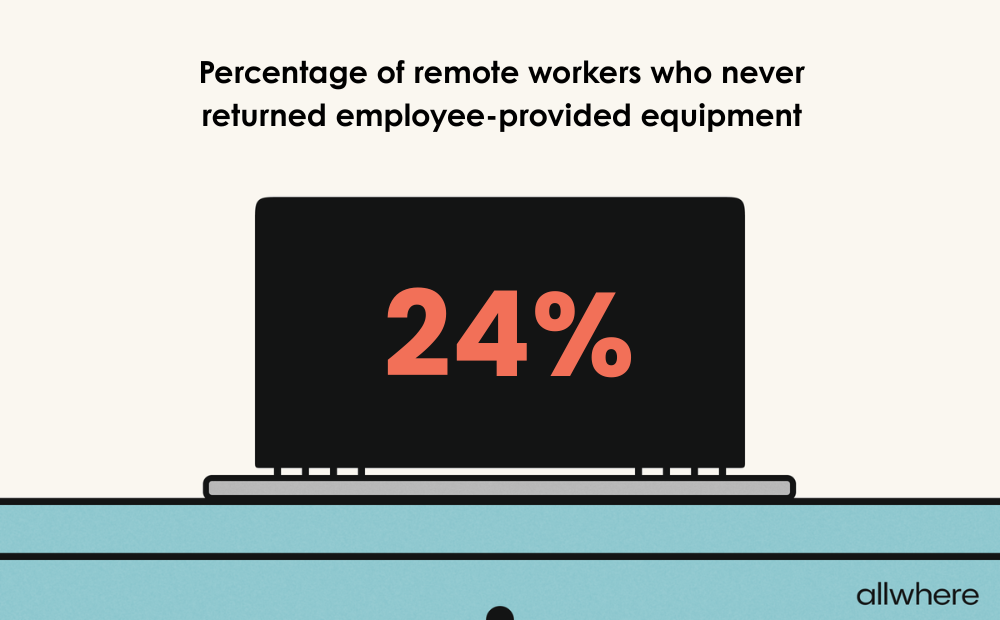
One particular question we asked was, “Do you currently still have any equipment from a former employer that you never returned?”
What we found was that nearly a quarter (24%) of employees said yes.
On top of that, when leaving a remote job, 21% of employees said they were never even asked to return their equipment, while 10% said they were asked but never did.
This tells us that remote asset management and IT asset recovery should be a point of emphasis for many employers, and taking initiatives to improve in this area could considerably improve IT asset ROI.
What’s Security Like for Remote Workers?
Another major concern for modern employers is IT security. Even with on-site office workers, data breaches and security threats are a serious concern.
But this is amplified when you’re dealing with a primarily remote employee team. And it’s especially concerning when remote employees use personal devices for work tasks.
However, according to our survey, remote employee security is an area that many employers need to address.
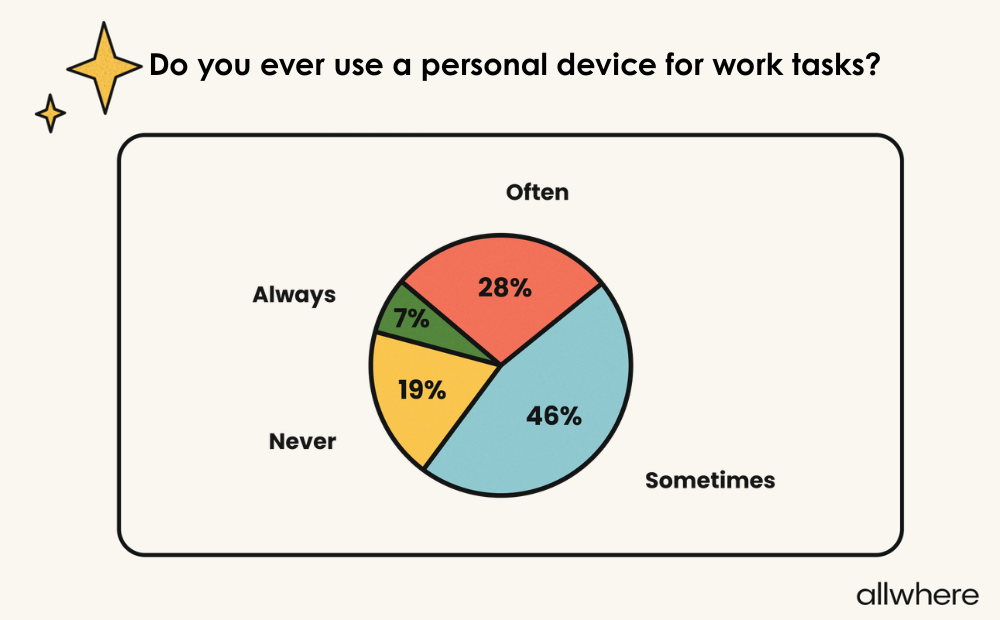
That’s because when asked, “Do you ever use a personal device for work tasks?” 7% of remote workers said always, 28% said often, and 46% said sometimes.
Only 19% said they never use a personal device for work tasks.
On top of that, 15% of remote workers said they’ve regularly accessed company data, files, or systems on a personal or unsecured device, and 22% said they’ve occasionally done so.
Note that you’re not supposed to use personal employee devices if your IT department follows IT best practices. And this creates a huge security risk when employees access company data, files, or systems on a personal or unsecured device.
What Are Remote Employees’ Experiences with Equipment?
Again, 44% of our survey respondents said that at some point they’ve bought their own work equipment because their employer’s equipment was either inadequate or didn’t arrive.
But of the other 56% of workers who used employer equipment, the majority reported having a positive experience. More specifically, 33% rated the equipment as excellent, and 49% rated it as good.
This tells us that most companies that provide their employees with equipment are hitting the mark and seeing a favorable employee experience.
With a total of 82% of respondents rating their experience as either excellent or good, odds are you can improve onboarding, increase productivity, and achieve other key benefits with efficient equipment procurement and deployment workflows.
Additionally, it should boost security by preventing employees from using personal devices for work tasks, like 7% of workers said they always did, 28% said they did often, and 46% said they did sometimes.
How Productive Are Remote Workers?
Now let’s look at just how big an impact (if any) working remotely has compared to working on-site.
According to Pew Research's remote work productivity statistics, the majority of people who worked from home at least some of the time reported higher productivity. To quantify, “56% said this arrangement helps them get their work done and meet deadlines.”
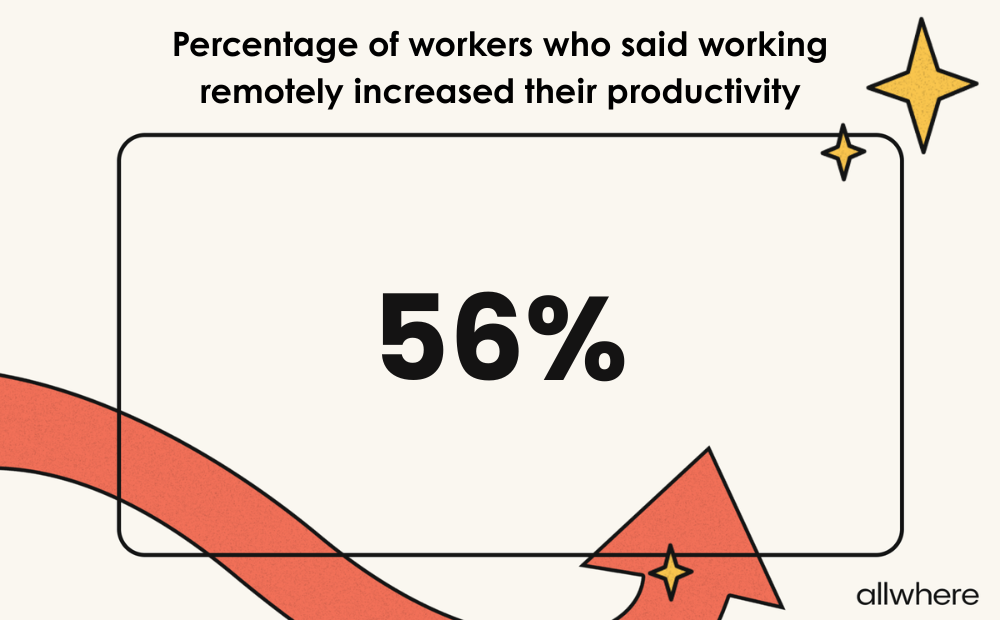
Conversely, “Only 7% say working from home hurts their ability to do these things, and 37% say it neither helps nor hurts.”
But what does more objective total factor productivity data say about remote flexibility?
BLS general remote work adoption statistics research supports increased productivity both during and after COVID.
“Over the 2019-22 period, the 11.8 average percentage-point increase in remote workers across industries was associated with an average 1.1 percentage-point increase in industry-level TFP.”
“This suggests that the increase in remote work substantially contributed to productivity growth.”
Although we can’t say for sure what long-term productivity will look like in five or 10 years from now, it’s clear that, overall, work from home statistics clearly show there’s a positive correlation between remote options and higher employee productivity.
Methodology
The goal of our remote worker survey was to gain a clear understanding of the state of remote work in 2026, as well as trends, challenges, experiences, and preferences.
To do so, we surveyed 100 respondents who were a mix of remote and hybrid workers, all of whom were US-based.
Respondents were asked a variety of questions, including their equipment setup, whether or not their employer provided equipment, if they’ve ever had to purchase their own equipment, their experience as a remote employee, and more.
The results offer a clear perspective on remote and hybrid work environments in the mid-2020s and guidance on how employers can best go about enabling a remote workforce moving forward.
