

Article by

Topics

One platform to manage the entire IT device lifecycle
GET STARTEDManaging the asset lifecycle can be incredibly complicated and comes with countless logistics headaches.
IT asset management uses structured, standardized workflows to simplify the process and positively impacts several areas, including visibility, productivity, security, compliance, and ROI.
Let’s now zoom in on the top nine benefits of IT asset management.
1. Less Manual Work, More Time for Priority Projects
When you combine tasks like asset procurement and deployment, employee and vendor communication, device retrieval, and juggling overall logistics, the modern IT team has a lot on its plate.
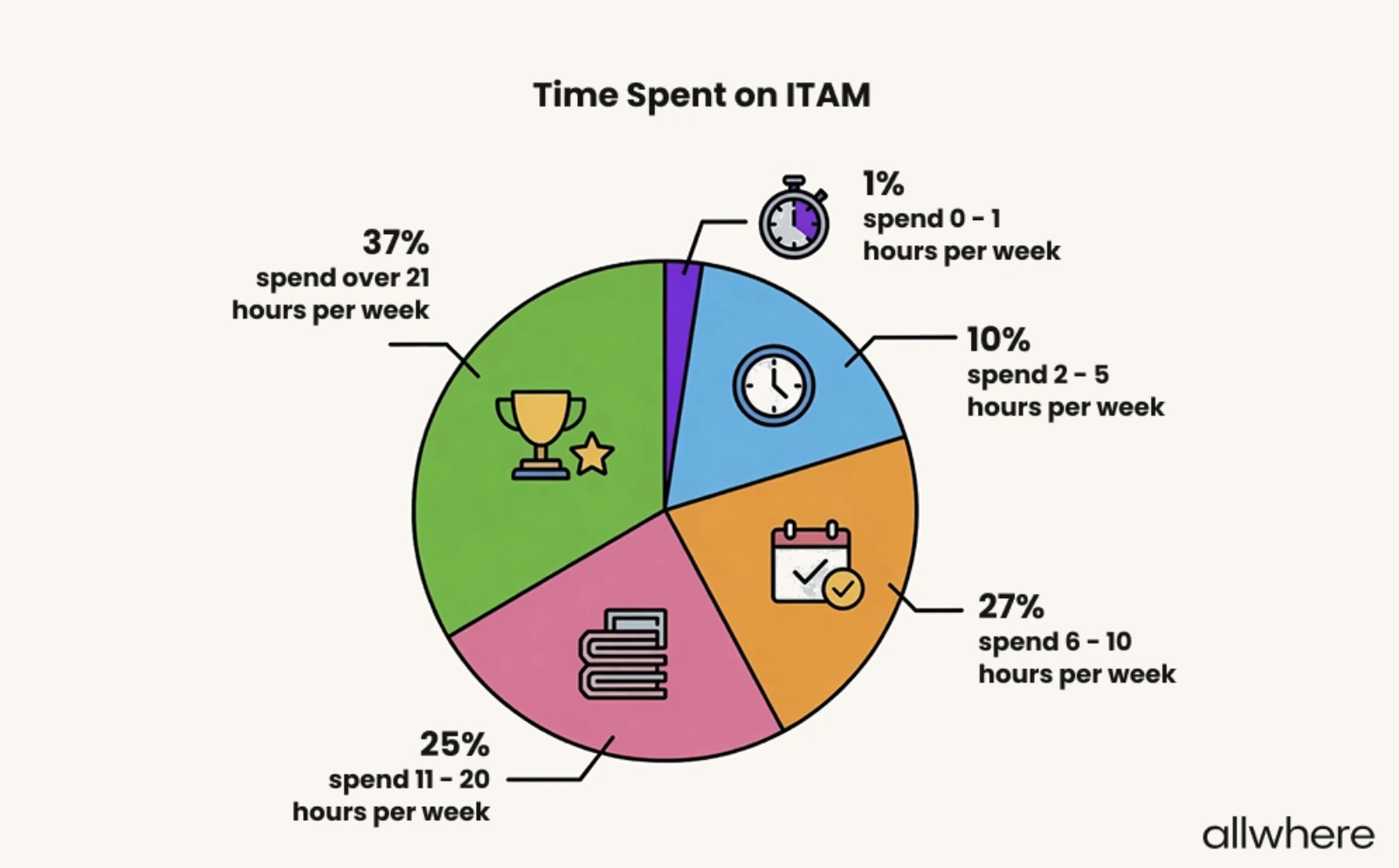
Whether it’s hardware asset management, software asset management, digital asset management, license management, or any other related task, 25% of companies spend 11 - 20 hours per week on ITAM, while 37% spend over 21 hours.
One of the biggest advantages of IT asset management services is that it can streamline many meticulous manual tasks, including those involved with ITSM, so you can focus on more pressing matters.
For example, allwhere can handle:
- Global procurement
- Deployment
- Asset discovery
- Communication
- End-to-end logistics
- Equipment storage
- Retrieval
- And much more
All the while, you can track every single device in your asset inventory so you always know what’s happening and there aren’t any blind spots for greater operational efficiency.
2. Simpler, Standardized Workflows
When teams use unsophisticated ITAM processes where workflows are cobbled together, it can create chaos. For instance, one employee may be using a spreadsheet while another is using a completely separate app, which can lead to inconsistencies and confusion.
But with effective ITAM processes in place, it creates structure and standardization that are essential to preventing asset data from being siloed and keeping everyone on the same page.
Rather than just winging it with things like procurement, deployment, technical storage requirements, maintenance, and retrieval, standardized asset lifecycle management establishes repeatable workflows for a high level of consistency.
And by using asset management software, all team members are using the same platform and seeing the exact same information when monitoring technology assets and individual asset information.
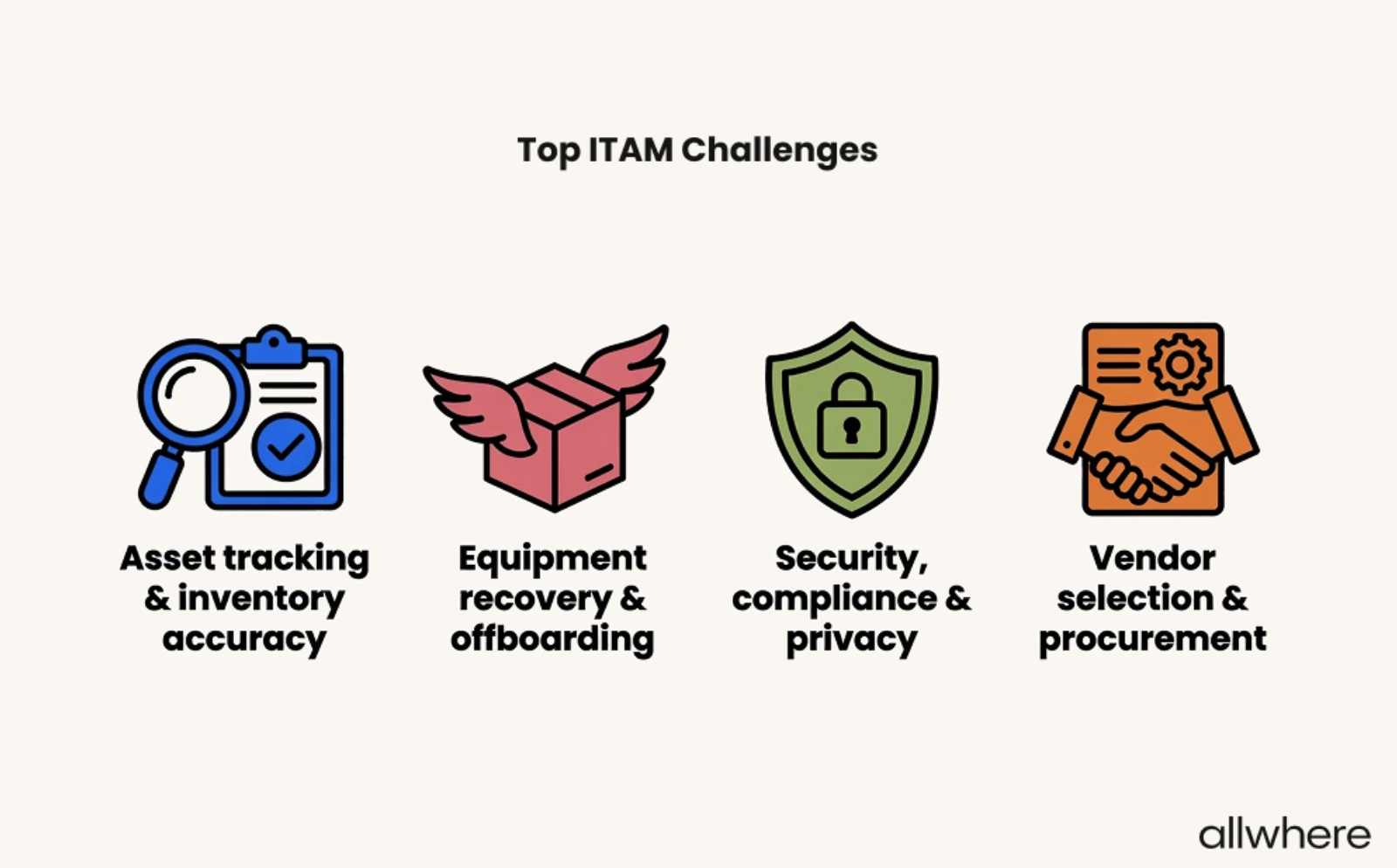
And that’s a big deal considering that asset tracking and inventory accuracy were cited as the number one ITAM challenge among today’s businesses.
Note that this can also support ITSM and service management by supplying your team with accurate data when dealing with incidents and requests.
3. A Full History for Every Asset, From Purchase to Retirement
The asset management lifecycle for the average organization can be fairly complex with a lot of twists and turns. Let’s take a laptop, for example.
It may be purchased, configured, shipped to an employee, sent to a technician for repair, sent back to the employee once it’s repaired, returned to your organization after the employee leaves, retrieved for decommissioning, and so on.
With so much movement, it’s easy to lose track of its history, which can be problematic when you need to perform maintenance, make configuration changes, perform security updates, and eventually retire the device.
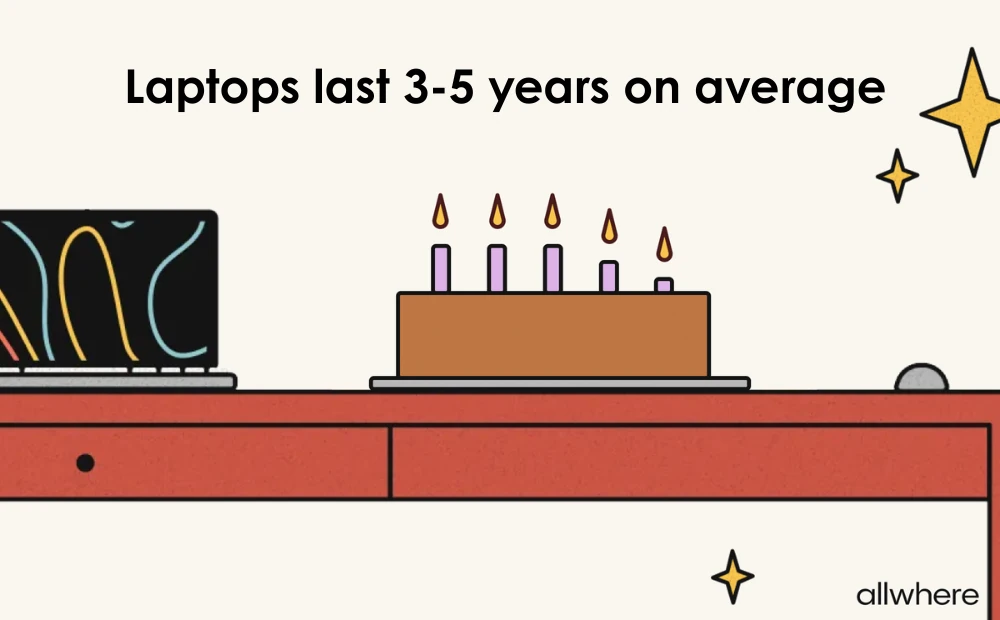
And considering the average lifespan of a business laptop is 3 - 5 years, it can potentially create performance and security issues if your organization doesn’t retire it in time.
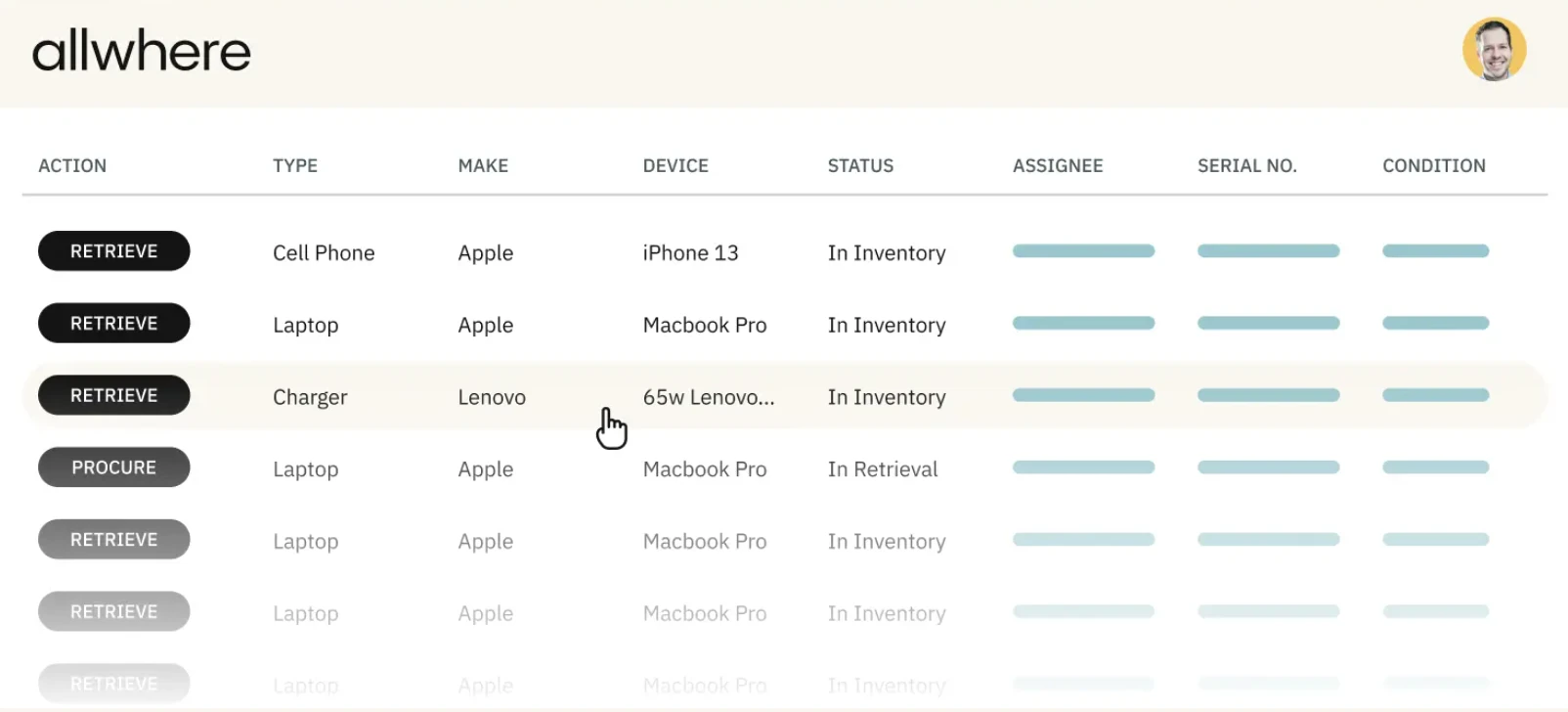
But with IT asset management companies like allwhere, you get full visibility at every stage from beginning to end. With it, you can track every device in your IT inventory, and, at a glance, follow it throughout its lifetime so you’re never in the dark.
4. Smarter Budgets and Spending
Stocking and maintaining an IT inventory isn’t cheap. According to 2026 data, “Enterprise organizations spend an average of 4 to 6% of annual revenue on IT.” However, companies in other industries, such as financial services, may spend up to 12%.
Whether it’s hardware assets, digital assets, or cloud assets, you want to make sure you’re getting the best ROI and taking advantage of cost savings whenever possible.
And that’s another key benefit of IT asset management.
By continually gathering data like asset usage, asset performance, repair frequency, and average device lifespan, you can generate big-picture insights.
In turn, this can help with future forecasting and resource allocation, where you right-size your IT inventory to ensure that you have what you need without wasting money on underutilized assets. This is an essential part of following IT asset management best practices.
5. Warranty and Contract Tracking That Prevents Surprises
Asset warranties and contracts can be difficult to track when they’re spread across different emails, spreadsheets, and applications.
When this happens, your organization is far more likely to have a warranty or contract expire without your knowledge, which can create problems.
Or, you may run into a situation where you pay for a costly repair because you thought a warranty had expired when, in reality, it hadn’t.
But with efficient lifecycle management, you can always stay on top of warranties and contracts so there are no surprises.
For instance, ITAM software can provide your organization with full visibility on active warranties and contracts, show you when they’ll expire, and automatically notify you when you’re nearing the expiration date.
6. Clear Ownership When Something Goes Wrong
Let’s say that a device gets damaged or lost. Or say that there’s a major security or compliance issue. Who’s responsible for it?
Without asset management processes in place, there may not be clear ownership, and you may have a “finger-pointing” situation on your hands.
That’s where asset management software comes in.
With it, you can instantly see who the assignee is, when they received the asset, where it’s located, its condition, and more.
That way, there’s maximum accountability, which enables you to take swift action when equipment is missing, damaged, or has technical issues.
So whether the device is in your central office or in the hands of a remote employee halfway around the world, there’s never any guessing when it comes to ownership.
And when combined with ITSM, you can also track the sequence of events involved with incident resolution.
7. Tighter Security Through Better Visibility
Less asset visibility equals decreased security.
So if your organization doesn’t have a clear overview of your assets, including the hardware and software that’s active, who’s using it, what security features are implemented, and where devices are in their lifespan, your security can be compromised.
One example would be unauthorized software usage that’s not in compliance with your company’s policy. Another would be shadow IT, where an employee connects a personal device to your organization’s network without your permission.
But when you have detailed asset information at your fingertips, it can help your organization identify these issues and respond quickly to drastically reduce vulnerabilities and improve your overall risk management.
8. Stress-Free Audits and Regulatory Compliance
Without tangible records and visibility, your organization may be left scrambling to perform an audit. But with ITAM software, you have a centralized resource for a single point of truth that you can conveniently access.
In turn, this greatly simplifies audits, and you always have detailed records throughout the entirety of an asset’s lifecycle.
And when it comes to regulatory compliance, ITAM software puts you in a much better position because it documents how your company manages assets according to policy.
For example, you can provide proof that proper security protocol was followed when decommissioning an asset, where you used data wiping to ensure that sensitive information wasn’t leaked.
This doesn’t guarantee 100% compliance, but it can go a long way in showing that you’re in control of asset management and following relevant policies.
9. Stronger Purchasing Decisions and Vendor Negotiations
Besides simply showing which assets you have and providing info on asset utilization, asset management can also help your organization make highly informed decisions as to what to buy moving forward.
For instance, tracking assets from different vendors over time would give you insights into which products are more incident-prone versus those that require less maintenance.
Besides that, asset data would let you objectively know which products last the longest so you could prioritize vendors that offer products with longer average lifespans.
That way, you could optimize your spending to achieve a greater ROI while also dealing with fewer maintenance headaches.
Additionally, having detailed information can create more leverage when approaching vendor negotiations. You may be able to get better deals and contract terms than if you were going in blind.
And if you know that a particular vendor is reputable, you may be able to get a volume discount when buying in bulk.
Wrapping Up
From less manual work to standardized workflows to increased visibility, asset management software and services offer immense benefits that give your organization far greater control of your IT inventory to help your organization meet its business goals.
allwhere can help your company simplify IT asset management by allowing you to see and manage the lifecycle of all your devices in one simple dashboard, and boost efficiency and ROI along the way.
We specialize in distributed companies with sizable employee hardware IT assessment workloads. You can schedule a demo here to learn more about how we can simplify your IT asset management and logistics.
