

Article by

Topics

One platform to manage the entire IT device lifecycle
GET STARTEDRunning a business can be daunting by itself. But when you add managing a complex IT infrastructure to the equation, business operations can become incredibly overwhelming.
That’s where IT outsourcing comes in.
Rather than handling every single IT task yourself, an outsourcing service allows you to hand off things like asset procurement and deployment, security, and IT ticketing to external providers.
In turn, this can save you time, increase operational efficiency, and in many cases, boost your IT ROI.
Key Takeaways
- IT outsourcing can encompass a wide variety of tasks. It can include everything from end-to-end ITAM and cybersecurity to data backups and software development. This means you can find a service that’s perfectly tailored to your needs.
- You can scale outsourcing services up or down. As your business grows or downsizes, you can always right-size your service offerings for maximum cost-effectiveness.
- You can avoid paying full-time employee salaries and go on a project-by-project basis. Service providers are flexible and will work with you without having to make huge commitments or hire full-time workers.
- Software development outsourcing lets you build your own custom software without relying on stock options. However, with software outsourcing, you don’t have to deal with the logistical headaches of assembling your own in-house development team, and you can go on a project-by-project basis.
- There are three main benefits of outsourcing. You get access to specialized expertise, can see a significant productivity increase, and maximize your ROI.
- Outsourcing can dramatically reduce operational costs. On average, companies save between 20 and 70%.
- Some companies have seen an ROI increase of up to 231% after outsourcing. This isn’t the norm per se, but it shows the potential impact this type of service can have.
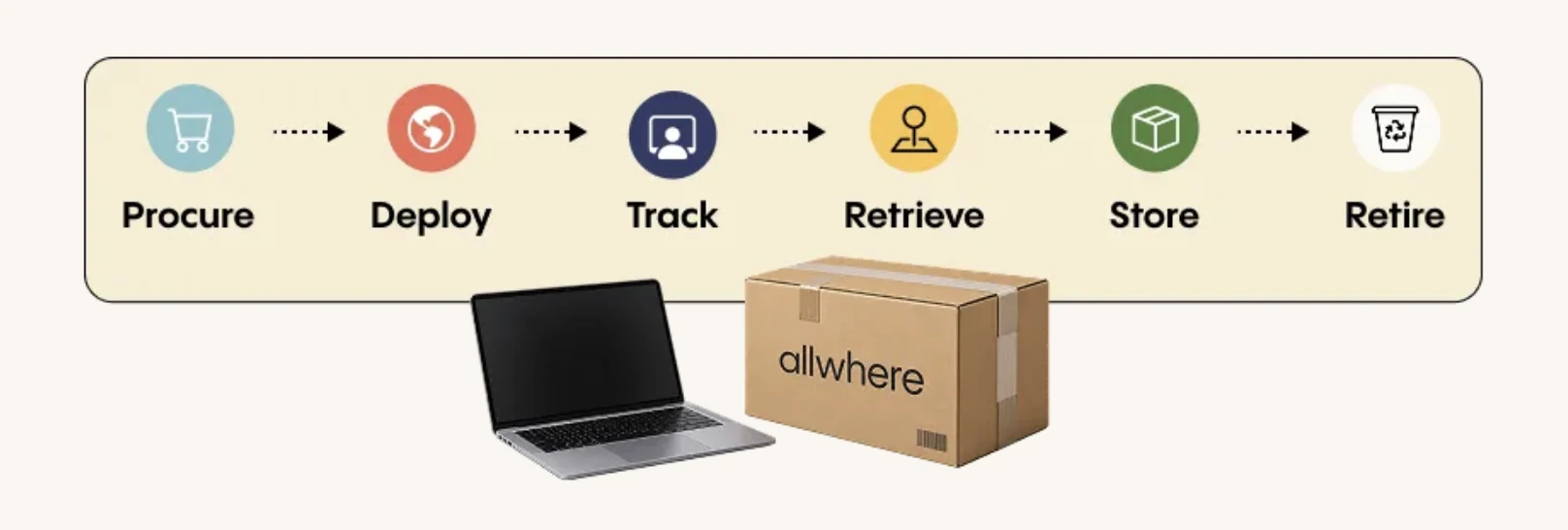
- You can outsource the entire IT asset management lifecycle with allwhere. This includes procurement, deployment, tracking, retrieval, storage, and retirement. And all of this can be monitored from a single software dashboard for full visibility.
9 Common IT Outsourcing Examples Companies Hand Off
1. IT Inventory Management
Whether you’re a small business, a large enterprise, or something in between, there can be a lot of moving parts in your IT inventory.
From hardware like monitors, laptops, and mobile devices to software to cloud computing, maintaining full visibility can be a tall order for even the most organized company.
Accordingly, a common area that outsourcing providers handle is IT inventory management.
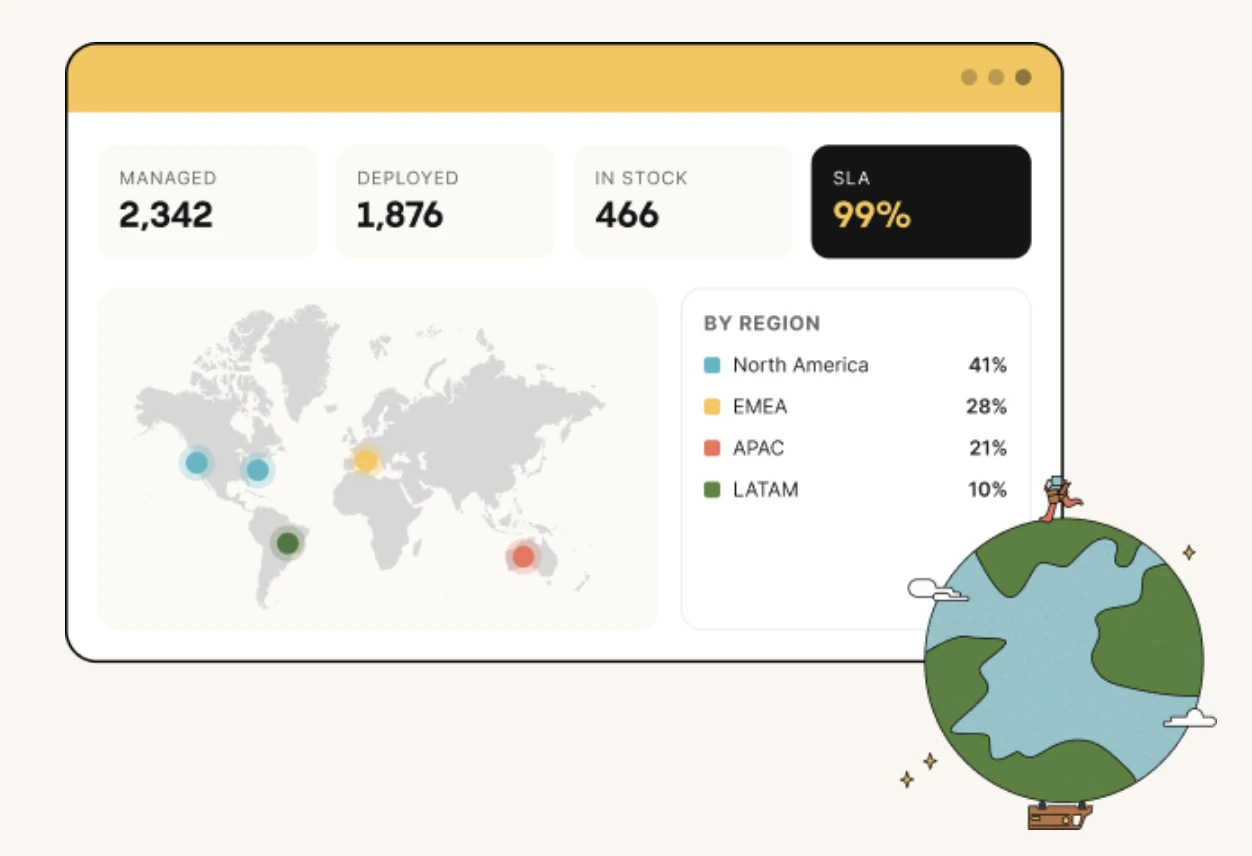
For instance, you can use asset discovery to locate all of the assets within your inventory and condense them into a single dashboard. And when you update your inventory with new assets or remove old ones, the changes will automatically be reflected.
This gives you an accurate, holistic overview of what you have in your IT inventory at all times, while sparing you the frustration of constantly making manual updates.
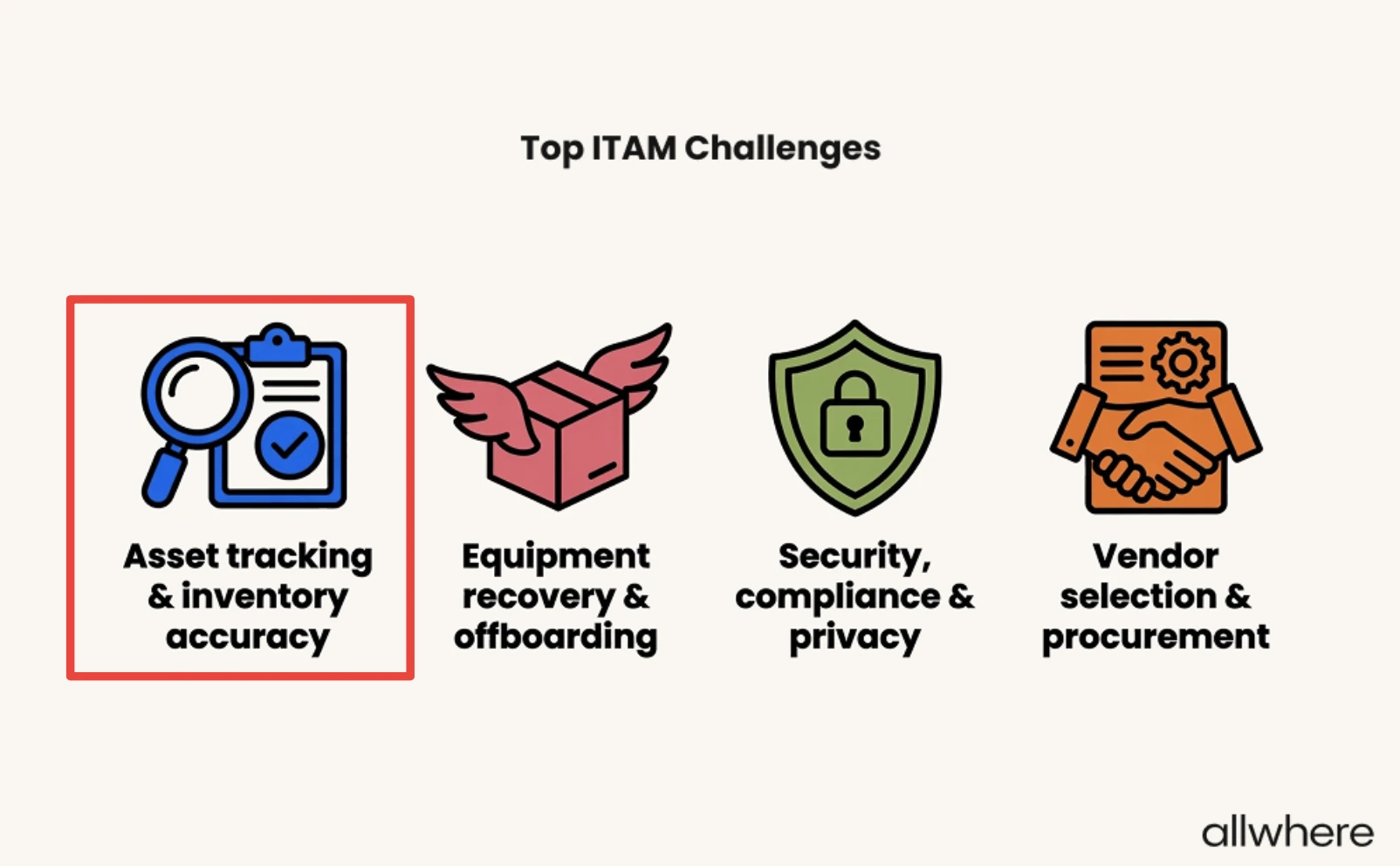
And considering that asset tracking and inventory accuracy were the number one ITAM challenge cited in our recent survey, this can be highly beneficial for many companies.
2. Asset Procurement
How do you find the right devices for your organization? Which vendors should you choose?
How do you get the best pricing? What about contract negotiation and ongoing support?
These are just a few questions that companies may have when approaching asset procurement.
Instead of tackling this internally, outsourcing to external experts can be an attractive option because they can:
- Use their expertise to find quality IT assets from reputable vendors
- Negotiate pricing and contract terms on your behalf
- Handle end-to-end logistics
- Deal with vendor and employee communication
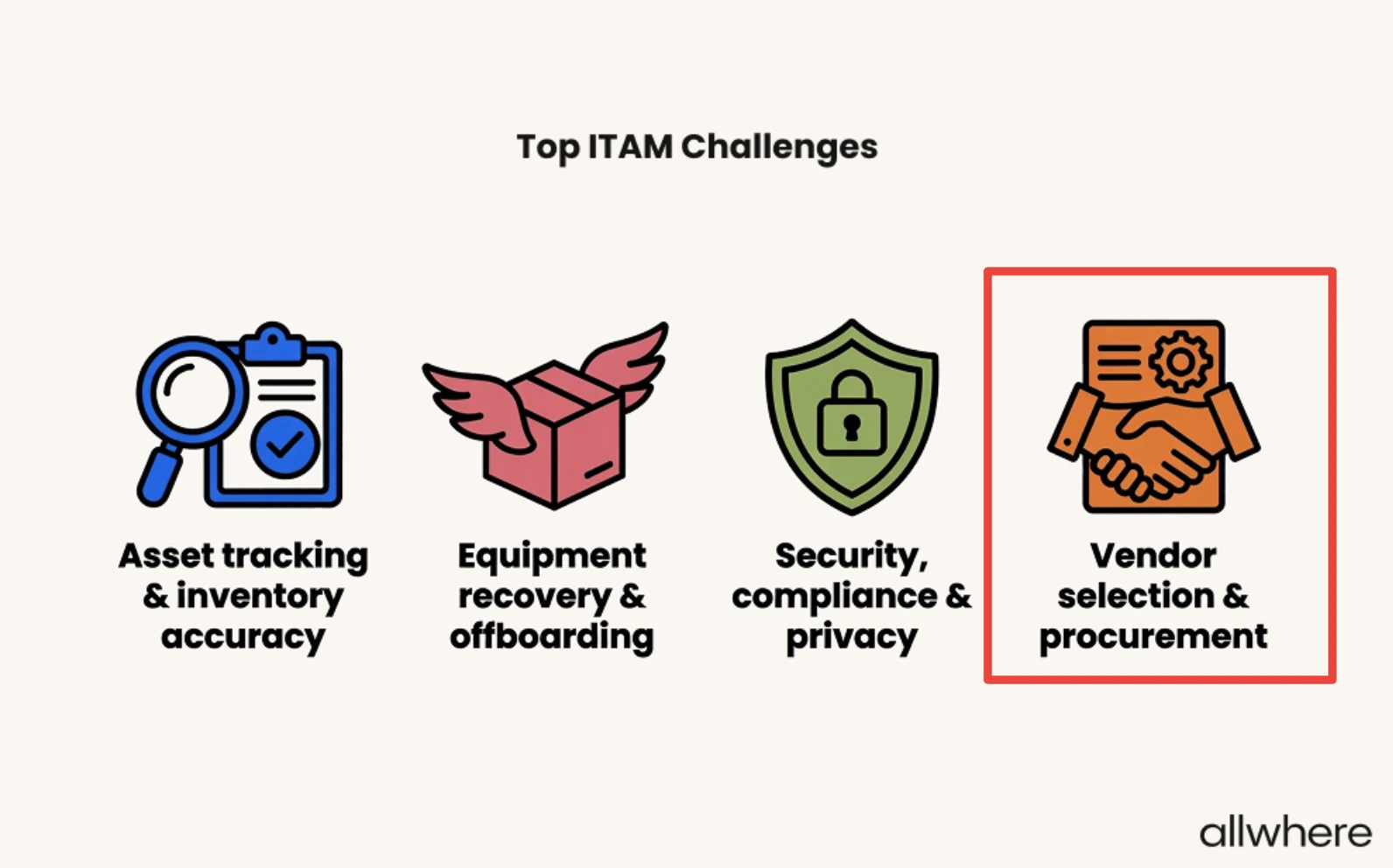
Given that vendor selection and procurement were ranked as the fourth biggest ITAM challenge, this can be huge in helping you optimize your procurement process and can take a lot off your plate.
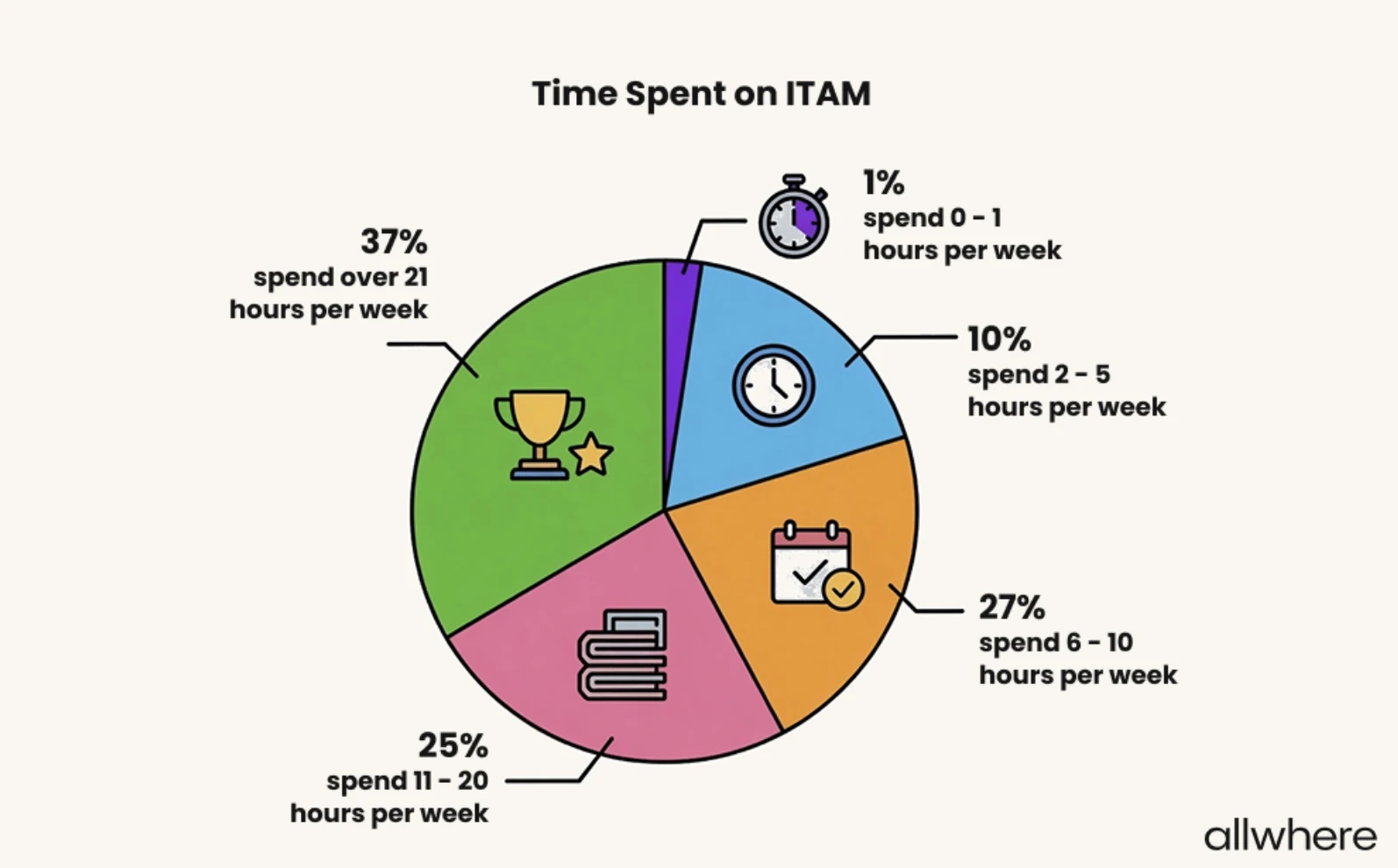
This can be especially helpful if you’re one of the 25% of companies that spend 11 to 20 hours per week on ITAM tasks or one of the 37% of companies that spend over 21 hours per week.
3. Asset Deployment
Besides procuring IT assets, you need to have an efficient means of getting them into the hands of your workforce.
Sometimes this means deploying assets in-house at a brick-and-mortar business location. Other times, this involves distributing assets remotely to employees in different states or different countries.
And as you might imagine, the logistics can be complicated and overwhelming, especially if you have a primarily remote/hybrid workforce or are doing deployment at scale.
In this situation, outsourcing partners can use their external expertise to efficiently deploy equipment as quickly and smoothly as possible.
For example, they may handle device configuration, software installation, employee access, shipping, tracking, and employee communication.
And if you’re distributing devices internationally, their service can take care of shipping restrictions, customs, import duties, and more.
All the while, you have access to detailed tracking so you know the status of every single device and there are no blind spots in your IT inventory.
4. Asset Retrieval
The final part of the asset management lifecycle is retrieval, where you either store, resell, recycle, or dispose of an asset.
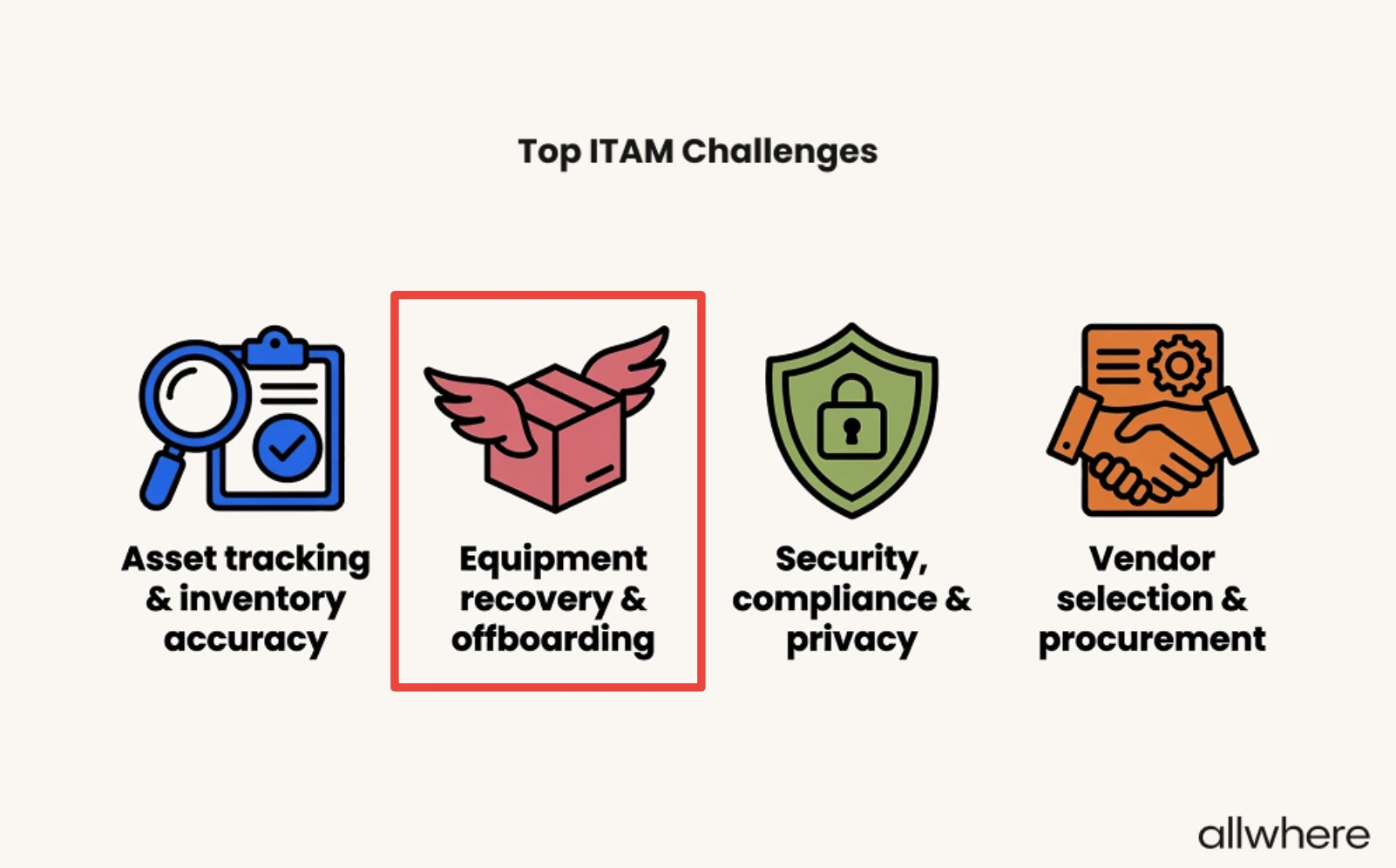
Note that equipment recovery and onboarding were cited as the second biggest ITAM challenge, which shows that many organizations could use some help in this department.
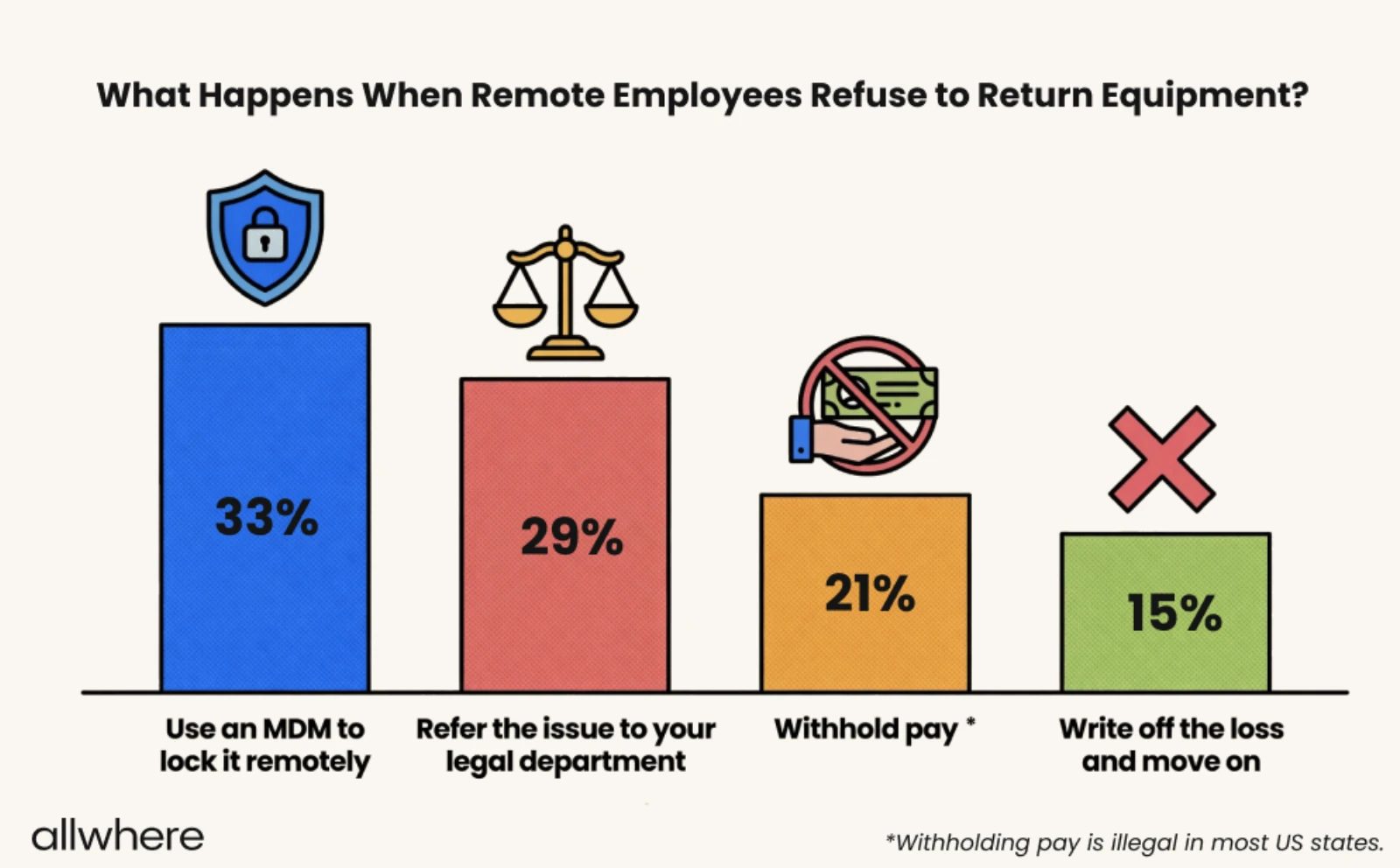
In particular, it’s common for organizations to encounter remote employees who refuse to return equipment — an issue they deal with by using an MDM to lock it remotely, referring the issue to their legal team, withholding pay (note that this is illegal in most states), and writing off the loss.
But going deeper, there are several ways that outsourcing service providers can streamline the retrieval process, including:
- Sending out easy return boxes to employees
- Dealing with shipping logistics
- Handling employee communication
- Sending reminders
- Tracking equipment returns from start to finish until items are received
That way, it’s hands-off for you so you can prioritize other areas of business operations.
5. Cybersecurity
Today’s average business has copious amounts of sensitive data floating around, which can create a serious cybersecurity threat. And because cyberattacks are becoming increasingly sophisticated, not all companies are equipped to handle cybersecurity with internal resources.
That’s why many opt for specialized expertise through outsourcing services.
For smaller companies, this may involve outsourcing things like vulnerability assessments, threat detection, security patching, and incident response.
For larger enterprises, this may be more intensive and involve a full-on managed service, where an IT security team handles cybersecurity 24/7.
Whatever the scenario, outsourcing cybersecurity allows an organization to bolster its defense without having to build and maintain a full-scale internal cybersecurity team — something that can be costly and time-consuming.
6. IT Compliance
Most companies have to deal with some level of compliance regulations. But for those in heavily regulated industries like finance and healthcare, the compliance standards can be off the charts.
And given that compliance is perpetually evolving, with constant twists and turns, managing it in-house isn’t always feasible, especially if you lack the expertise.
Choosing to outsource this area of operations often makes sense, as it allows you to leverage specialized expertise that eats, sleeps, and breathes IT compliance and doesn’t put an unnecessary burden on your internal IT teams.
Not only that, having external teams provides an objective perspective that you might not always get when taking an internal approach.
Some specific areas that are typically covered with an outsourcing model include compliance policy creation and modification, risk management, compliance audits, and ongoing monitoring.
By going with this service, you should put your business in a better position to drastically reduce your risk and remain compliant in an ever-changing compliance landscape.
7. Data Backup and Disaster Recovery
Hardware failures, cyber attacks, natural disasters, and other issues can lead to widespread data loss and are always a concern that modern organizations should have in the back of their mind.
But like many of the things mentioned on this list, tackling data backup and disaster recovery internally is often easier said than done, especially if you have a large, complex IT infrastructure.
Fortunately, this is yet another area where outsourcing companies can step in to keep your data protected without having to create a dedicated internal team.
Things like disaster recovery planning, backup testing, and automated data backups can be outsourced through managed services that can give your organization valuable peace of mind that you’ll be okay even in a worst-case scenario.
8. IT Ticketing
Assets like hardware, software, cloud services, and other IT solutions will inevitably experience problems that require assistance.
When this happens, it’s crucial that you have streamlined, standardized processes in place to quickly diagnose the problem, route it to the correct person, and find a solution.
If you only have a handful of employees, this should be fairly straightforward. But if you’re dealing with a larger team or get inundated with a massive number of requests, it can quickly become overwhelming.
That’s why many companies benefit from outsourcing IT ticketing, where a service provider uses their expertise to take care of ticket creation, prioritization, routing, and resolution.
This can be instrumental in hastening the response time, reducing downtime, improving productivity, and optimizing the overall employee experience.
And zooming out, external vendors can gather big-picture insights to help you refine your IT infrastructure by identifying macro trends and patterns.
If, for example, a particular piece of your cloud infrastructure experiences the same issues repeatedly, you would know what to address.
9. Software Development
This final outsourcing example won’t apply to all businesses, as many don’t have the need for personalized software or app development. But for those that need fully customized solutions where a stock product just won’t cut it, outsourcing software development can be a great option.
With this type of business process outsourcing, you use outsourced developers to handle product development and software engineering to build a specialized solution that’s tailor-made for your organization’s needs.
Here, they may handle software engineering and development, testing, and technical support, while leveraging their expertise to create an end product that perfectly checks all of the right boxes.
But rather than having to make a permanent hire, outsourcing software development offers a short-term solution without a long-term commitment — a solution that many businesses find to be cost-effective.
3 Key Advantages of Outsourcing
1. Access to Specialized Expertise
As we’ve learned with the sheer number of outsourcing use cases, there’s a lot that goes into building a solid IT infrastructure.
And if you’re limiting yourself to traditional in-house hiring, it can be challenging to build a comprehensive team that covers all of the bases — not to mention, it's incredibly expensive.
One of the main benefits of successful outsourcing is that you have access to highly specialized experts in areas like ITAM lifecycle management, cybersecurity, and software engineering to cover all of your needs without paying for unnecessary services.
Besides that, you can hire talented individuals from all over the world rather than being limited to your immediate geographical location. Also, as your needs shift, you can adjust your services as needed so that they’re always right-sized.
2. Increased Productivity
A natural byproduct of leveraging specialized outsourcing services where experts are integrated into your business workflows is far greater productivity than you would typically have by limiting yourself to internal staff.
For instance, partnering with IT asset management services for inventory management, procurement, deployment, and retrieval can help you accomplish far more than if you were doing it in-house.
From handling vendor communication and negotiation to streamlining IT logistics and efficiently managing assets on a unified dashboard, this helps you accomplish much more with less effort without having to continually expand your workforce.
An added plus is that this allows your employees to focus on core competencies and higher-value tasks that are critical to your bottom line, which can unlock even more benefits.
3. Cost Savings
When you look at it short-term and consider the upfront costs, the ROI of outsourcing services may not be so evident. But when you think long-term, the ROI can be quite staggering.
Here are some stats for perspective.
- “Companies save between 20 and 70% on operational costs.”
- “Companies outsourcing IT functions report an average 32% reduction in labor costs.”
- “Strategic outsourcing can yield up to 231% ROI.”
While this doesn’t guarantee that you’ll see this level of savings when using outsourcing models, there’s a very good chance that there will be a noticeable impact. And as you continue to refine these services, your ROI should only continue to grow.
The main reasons for these savings are access to high talent expertise with lower operational costs, no need for specialized equipment and training, and not having to pay as many full-time salaries.
What You Can Outsource with allwhere
If you’re looking to outsource IT asset lifecycle management, allwhere can be an excellent fit for your workflows.
We handle the first four outsourcing examples on this list, including IT inventory management and asset procurement, deployment, and retrieval, as well as asset storage and retirement.
Along with that, we offer comprehensive tracking every step of the way so you’re never in the dark as to the status of your assets.
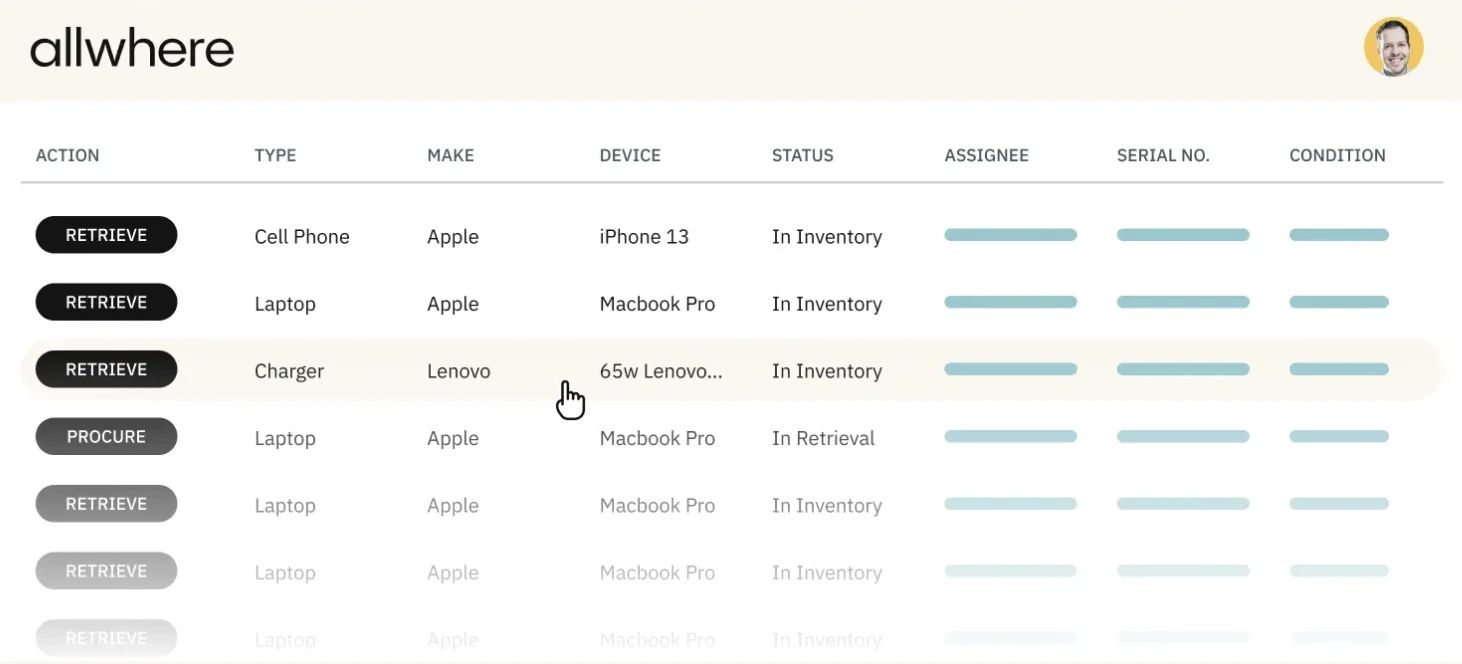
For inventory management, you can maintain full visibility of your IT assets, including where they are, who has what, and where each asset is in its lifecycle.
You can also use identifiers like asset type, make, device, status, assignee, serial number, and condition to keep everything perfectly organized, something that’s integral to IT asset management best practices.
For procurement, we tap into our extensive network of reputable vendors to find the optimal IT assets to match your organization’s unique needs and budget.
For deployment, we send customized kits to employees all over the world, while handling end-to-end logistics and communication to keep your team supplied with everything they need, and no heavy lifting on your end.
And for retrieval, we send out kits to your employees that contain everything they need for a hassle-free return, including a box, packing materials, a prepaid return label, and simple instructions.
We also take care of employee communication and notifications, while keeping you updated with status updates until the retrieval is completed.
And if you need, we can store your equipment at one of our facilities until future redeployment.
Wrapping Up
Whether it’s onshore outsourcing, nearshore outsourcing, offshore outsourcing, or hybrid outsourcing, there are so many ways to improve your business processes. It’s just a matter of finding the perfect arrangement for your company.
And again, if you’re looking specifically to outsource ITAM, consider allwhere.
We are one of the world’s leading IT asset management companies, and we’d love to help you streamline your ITAM lifecycle at all stages.
Learn more about our offerings here.
