

Article by

Topics

One platform to manage the entire IT device lifecycle
GET STARTEDWith such a large portion of today’s employees working in remote/hybrid positions, it’s important for company leaders to fully understand the digital workplace landscape.
For this post, we’ll unpack seven statistics that cover a wide spectrum and will help you better navigate digital workplace transformation.
Key Takeaways
- More than half of employees work from home at least part of the time.
- 55% of workers don’t have critical tech, like system access to collaboration platforms, to onboard on their first day on the job.
- 81% of employees use personal devices, but only 31% of companies have a formal BYOD policy.
- 46% say employees exposed company data through unsanctioned AI
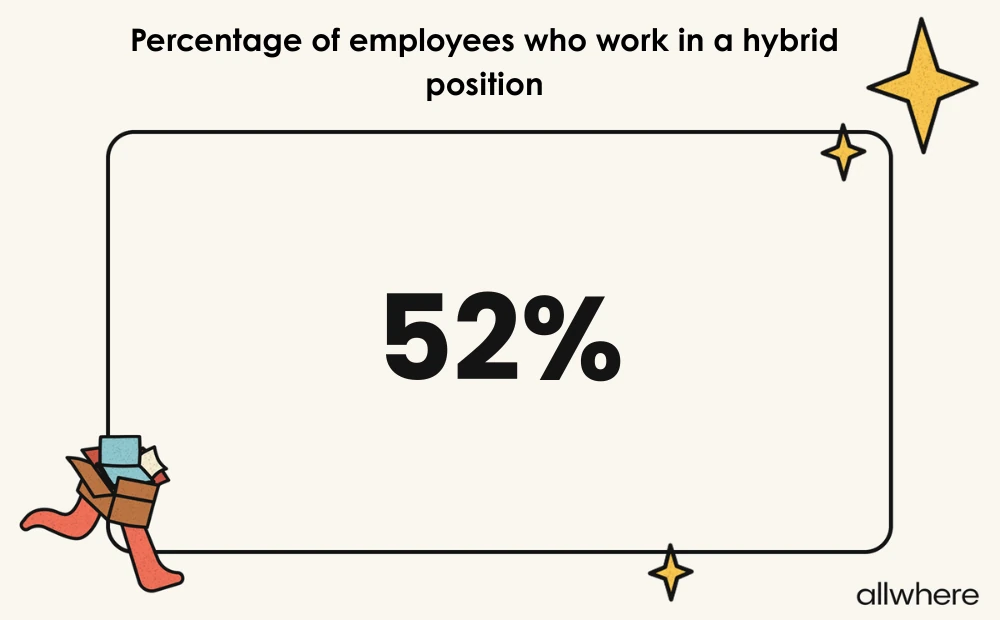
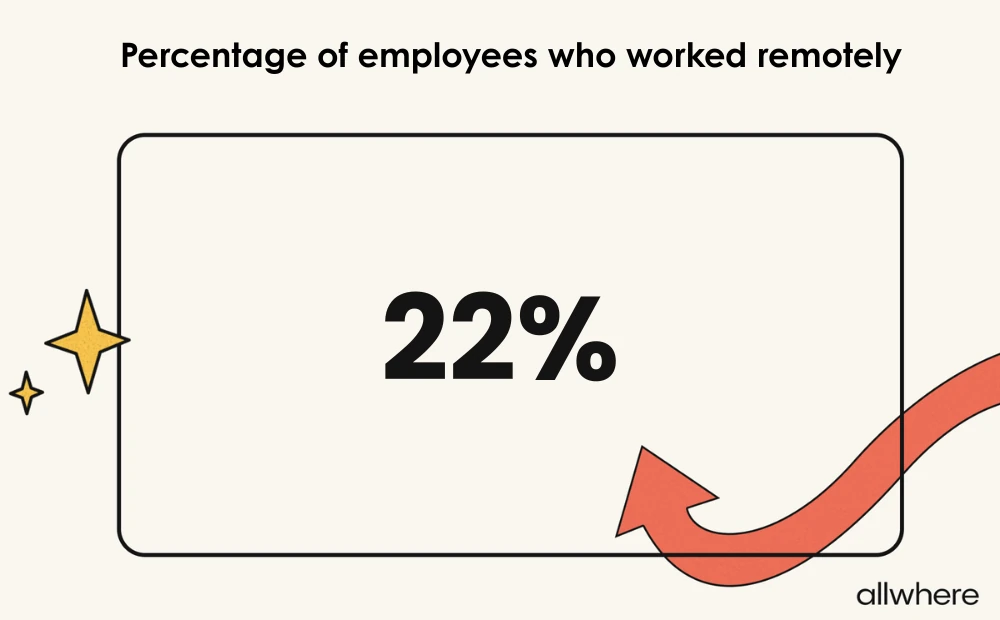
Remote Work: 52% of Employees Do Hybrid Work vs. 22% Fully Remote
Ever since COVID, there’s been a dramatic spike in the global digital workplace market. Recent data quantifies this by identifying two key statistics.
First, just over half of the current workforce (52%) works hybrid, where they split their time between an in-office and home position.
As for fully remote workers, research places this number at 22%, meaning that nearly a quarter of modern employees work entirely from home.
It should also be noted that offering hybrid/remote positions has become important for employee engagement, employee satisfaction, and employee retention.
That’s why many business leaders recommend that organizations account for the increasing digital workplace market size forecast and provide remote/hybrid options as part of workplace transformation to enhance the overall digital employee experience.
Digital Employee Onboarding: 55% of New Hires Can’t Fully Work on Day One
Ensuring new employees are ready to go and equipped with the proper tech is critical to operational efficiency.
But here’s the thing. More new hires than not can’t fully work on their first day, simply because of inadequate digital workplace solutions.
For perspective, when asked, “On your first day, were your accounts, software, and system access fully set up and working?” only 45% of employees said “yes.”
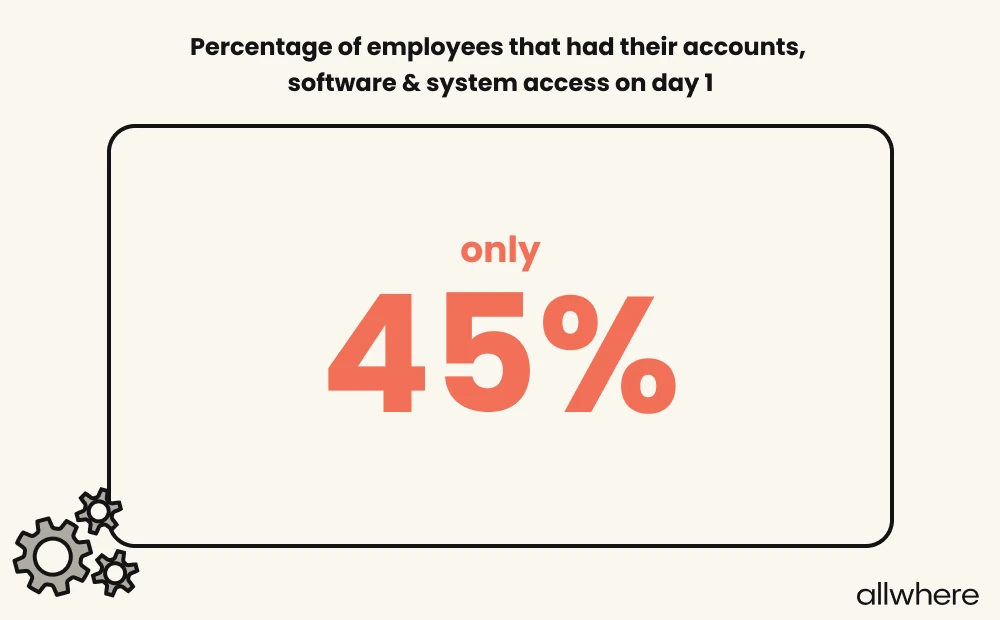
Conversely, 48% said “partly — some access was missing or delayed,” and 7% said, “no — little or nothing was ready.”
And for those who lacked the right digital workplace tools, like Google Workspace or Microsoft Teams, 47% said it took them a month or more to reach full employee productivity, and delayed their ability to apply their digital skills.
Not to mention, this can negatively impact the customer experience if knowledge workers aren’t equipped to respond to customer requests effectively.
81% of Employees Use Personal Devices for Work Tasks
Whether a worker is using communication tools, collaboration tools, workflow automation platforms, or any other type of digital tools with sensitive information, this carries an inherent security risk to your digital transformation efforts.
It’s a concern when employees work entirely on-site. But it can be especially problematic in the digital workplace where employees use personal devices for projects.
Here’s what’s a little alarming. One of our labor statistics found that 81% of employees use a personal device for work tasks, with 46% saying they do it “sometimes”, 28% doing it “often”, and 7% doing it “always.”
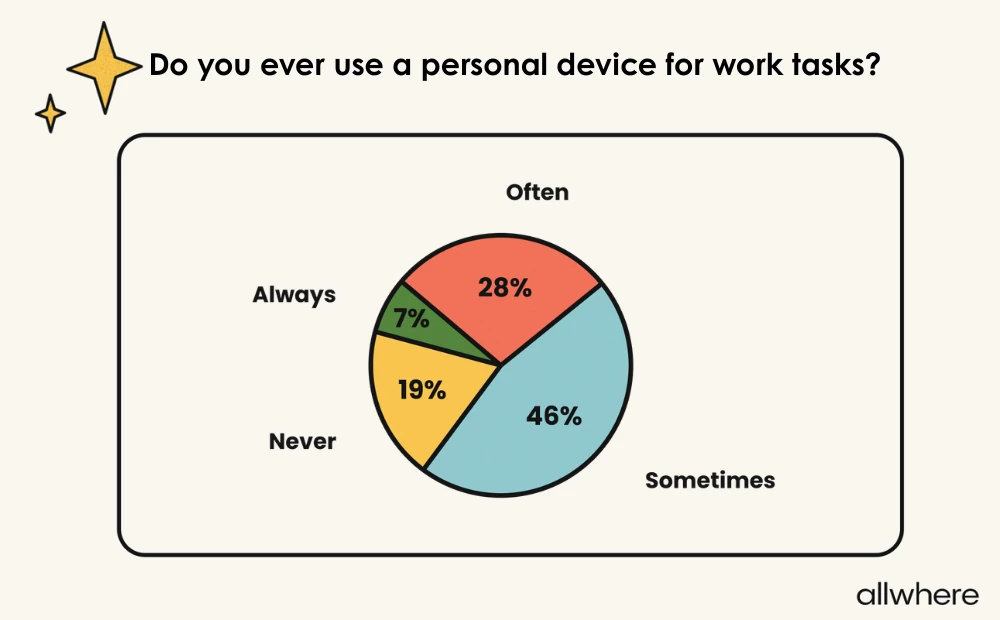
This is concerning because it can open the door for security and compliance vulnerabilities, especially if workers consistently access company data, files, or systems.
46% Say Employees Exposed Company Data Through Unsanctioned AI
Digital transformation initiatives offer a wide array of benefits to both brick-and-mortar and digital workplaces.
However, they can be a double-edged sword when shadow IT emerges; where workers use hardware, software, artificial intelligence, and other technologies without an IT team’s knowledge or approval.
That’s because this can greatly compromise security and create a level of risk that you don’t typically see when technology is accounted for.
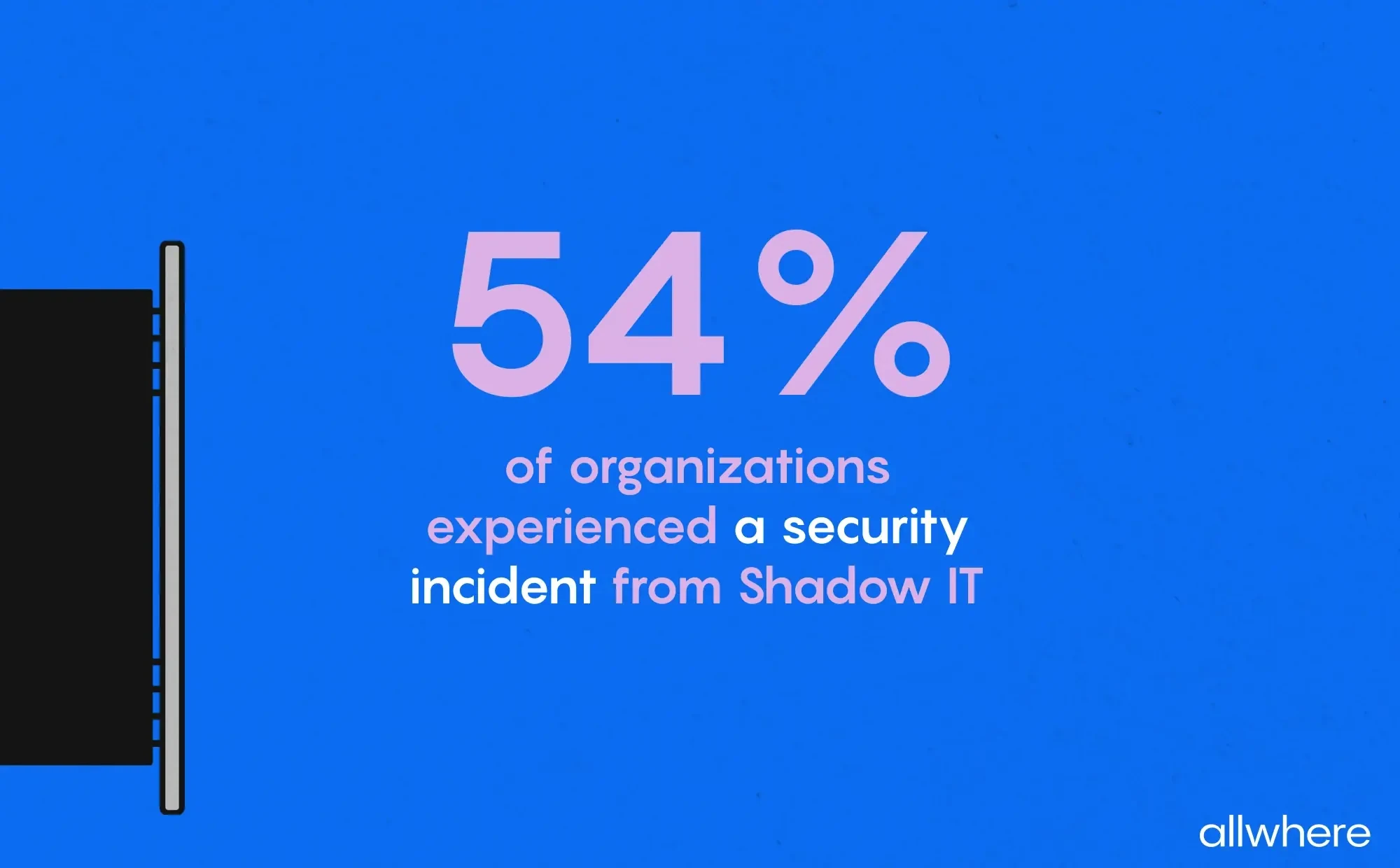
For perspective, statistics data found that 54% of organizations have already experienced a security incident that stemmed from shadow IT.
On top of that, 46% say a worker has put company data at risk by using unsanctioned AI tools like a public chatbot like ChatGPT or Microsoft Copilot.
Only 31% of Companies Have a Formal BYOD Policy
Research data has found that using personal devices is fairly common among today’s companies, with 28% of employees being required to use personal devices.
But what’s interesting is that of those employees who use their own devices, 57% aren’t reimbursed.
While we don’t feel that most companies need to reimburse employees and most employees don’t expect it, it’s still something worth considering, as 29.5% of employees receive a regular reimbursement or stipend, while 12.5% receive it partially.
It’s also worth noting that only 31% of organizations have an official BYOD policy, which shows that personal device use is far ahead of policy.
64% of Companies Have Lost an IT Asset in Shipping
A critical part of IT asset management best practices is efficiently shipping devices to employees and having employees send them back. But there’s a problem.
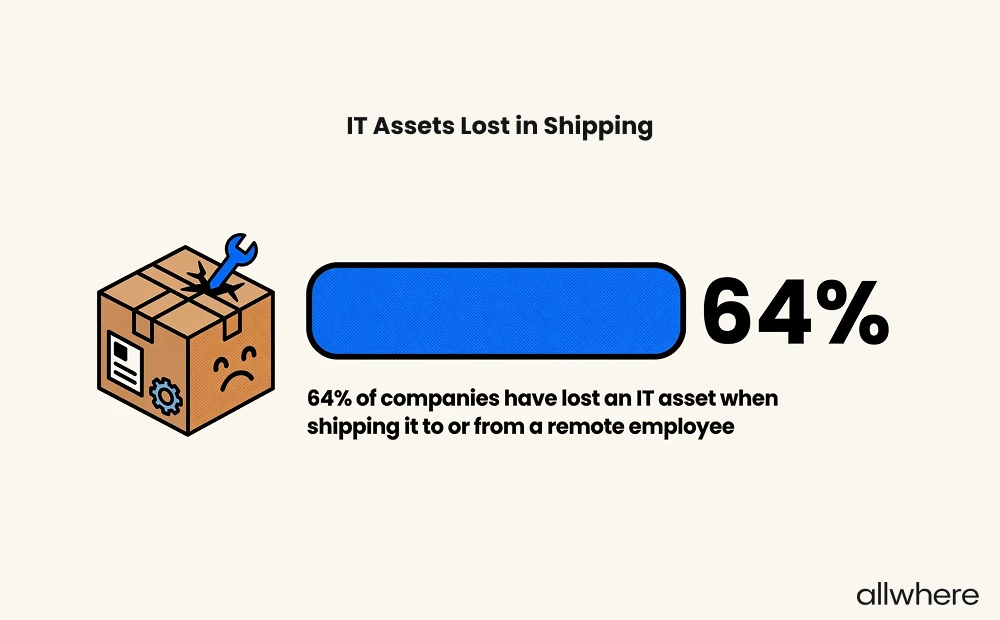
Nearly two-thirds (64%) of companies have lost equipment when shipping to or from an employee.
If this happens, it takes the average organization one to two weeks to recover a device. However, for some companies, it can end up taking more than three weeks.
These digital workplace statistics show just how important it is to establish reliable shipping logistics. But if you’re unable to do so on your own, you’ll want to use IT asset management services like allwhere to handle it for you.
Laptops Lose 60.8% of Their Value Within Three Years
The last of the statistics data deals with laptop depreciation — something companies need to account for with digital transformation spending.
To quantify, laptops lose a total of 60.8% of their value after hitting the three-year mark, as illustrated in this graph.
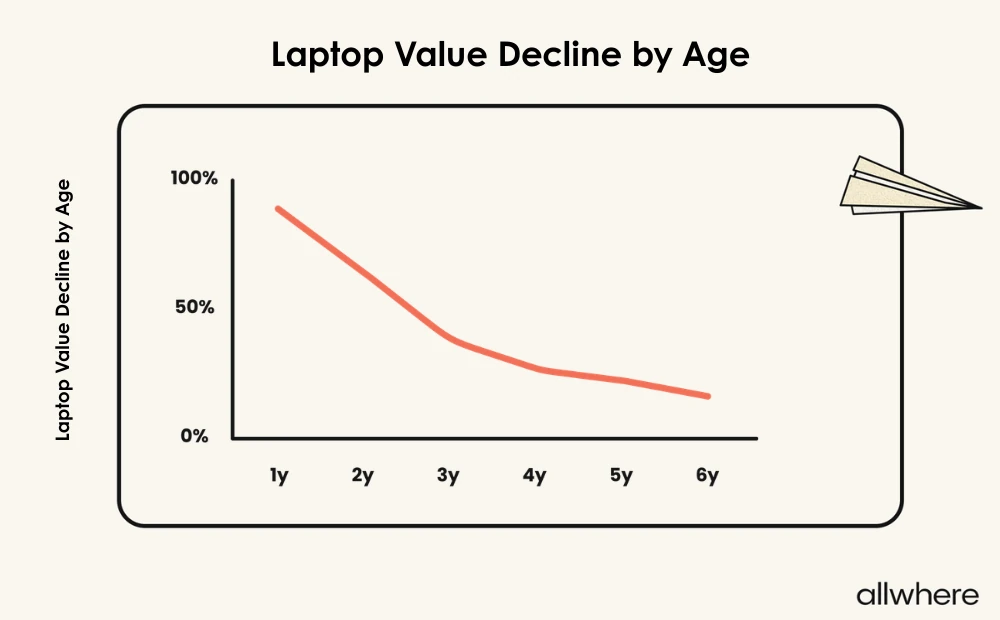
This means that whether you’re running a small business, a large enterprise, or something in between, you’ll usually want to aim for a three- to four-year refresh cycle to ensure your equipment is running efficiently and reduce security vulnerabilities.
Methodology
The data from these statistics were drawn from many different sources, including remote worker, onboarding, shadow IT, and BYOD statistics.
Some of this data was from allwhere’s own personal surveys, which has been rated as one of the best IT asset management companies. Other statistics came from reputable sources like Gallup and Pew Research.
Our purpose in synthesizing this data was to provide an overarching view of the current state of the digital workplace and isolate some of the key challenges companies face to help provide direction on proactively finding resolutions.
