

Article by

Topics

One platform to manage the entire IT device lifecycle
GET STARTEDIT procurement, which involves acquiring hardware, software, cloud assets, and other IT solutions, has many twists and turns.
From finding top vendors to optimizing contracts to tracking shipments to managing security, you need highly strategic procurement processes in place to thrive.
A great starting point is to understand the biggest IT procurement challenges today’s organizations face and to build your sourcing strategy accordingly.
Key Takeaways
- Vendor evaluation and finding reputable vendors that can fulfill orders on time is a major challenge. With countless pricing tiers, product features, and service levels, many organizations find themselves overwhelmed.
- Contract negotiation is part of a procurement strategy that demands a lot of attention. This helps companies get the best payment terms and conditions from a supplier. And in some cases, this can lead to volume discounts.
- Asset shortages and inefficient global logistics can create workforce disruptions. Common issues organizations run into are limited product availability and problems with international shipments due to customs requirements, shipping regulations, and delays.
- Maintaining full visibility is essential to procurement best practices. Ideally, you’ll use a single dashboard to provide an accurate, real-time overview of your IT assets throughout the entire procurement process, as it’s part of procurement best practices.
- Managing multiple vendors and the IT lifecycle creates added complexities in strategic procurement. This can be especially problematic for larger companies or those that are rapidly scaling.
- Automation and partnering with a third-party expert, like allwhere, can dramatically simplify your procurement strategy. Automation streamlines many meticulous, manual processes, while procurement management can cover most procurement tasks from start to finish.
10 Top IT Procurement Challenges
1. Finding Reputable Vendors
Effective procurement always starts with vendor research, where your organization looks at top competitors, narrows it down by supplier performance, engages with potential vendors, and ultimately chooses the supplier you feel delivers the most value.
Of course, this is often easier said than done. Whether it’s hardware procurement, digital procurement, software procurement, or any other type of IT solution, the landscape is often stacked with different products, pricing tiers, and service levels.
Therefore, it’s not always easy for your procurement team to see which supplier is the right fit for your company in the long term.
Make the wrong choice, and you may have to deal with poor or counterfeit products or delayed shipping — all of which can be disruptive to business operations.
Given that supplier selection and procurement were ranked as the number four ITAM challenge, this is a common issue for many companies in the procurement process.
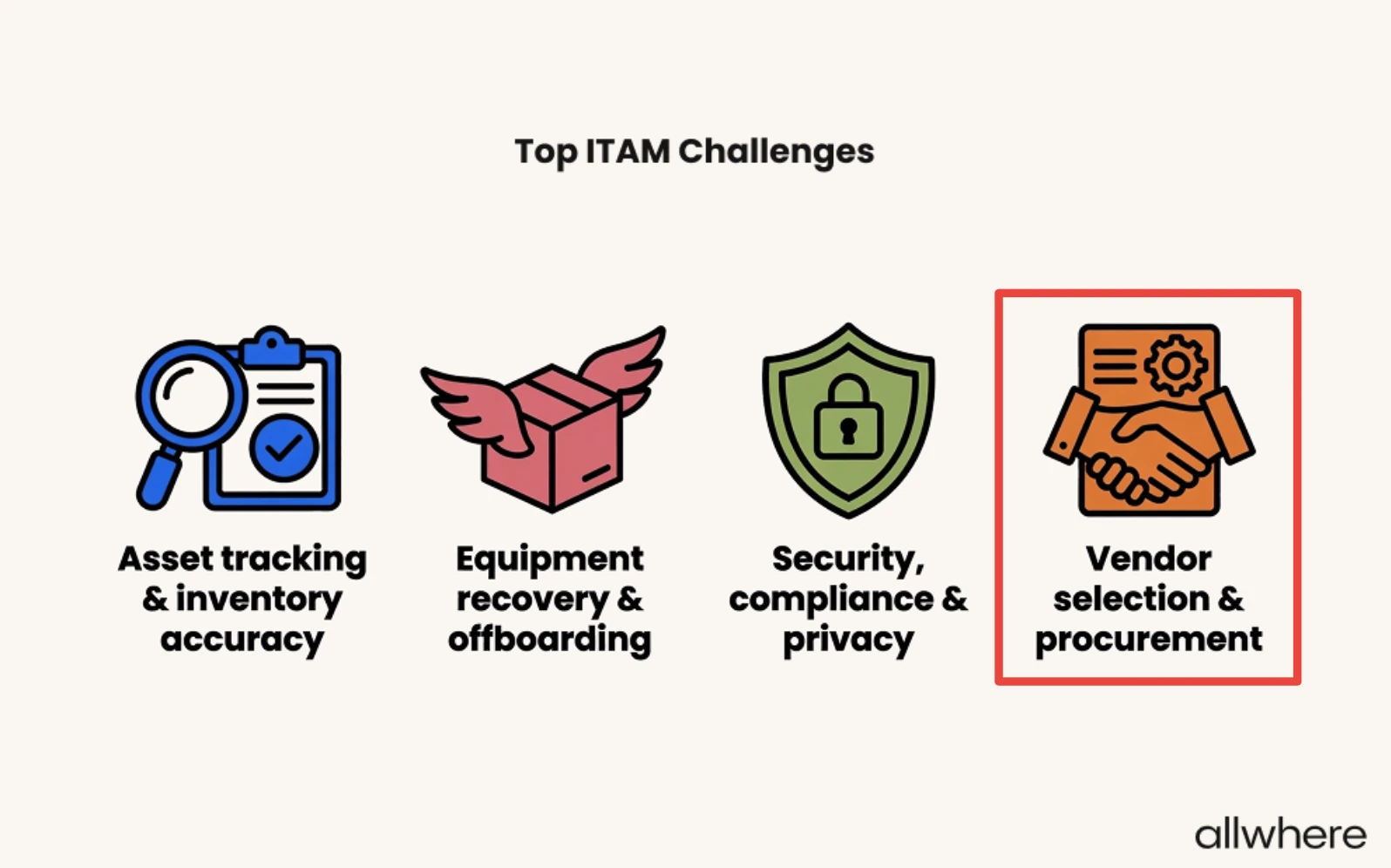
That’s why it’s important to have a standardized procurement strategy for making procurement decisions, which can include vendor selection criteria, detailed comparisons, supplier performance history, and overall reputation.
2. Contract Negotiation
There’s a lot more that goes into procurement contracts than just signing on the dotted line.
Your procurement manager needs to look at things like payment terms, potential volume discounts, product warranties, long-term flexibility to accommodate scaling, and renewal conditions.
Without careful contract negotiation, you may get locked into less than favorable terms or end up leaving money on the table during technology procurement.
For example, you may be able to take advantage of a volume discount but fail to do so without knowing the ins and outs of contract negotiation.
This is an area where many organizations can benefit from partnering with procurement leaders who are experts at getting the absolute most out of each contract and ensuring vendor relationships are truly beneficial to IT procurement strategies.
3. Asset Shortages
Here’s the scenario. After carefully researching and vetting potential vendors and making a purchase order, you come to find out that the specific IT equipment you want is out of stock.
You’re then left scrambling to either select an alternate type of equipment that doesn’t necessarily check all of the right boxes or are forced to make a different supplier selection. Either way, this creates stress and disruptions to your procurement strategy workflows.
That’s why you need to be certain that the supplier you choose is capable of delivering on the specific assets you agree upon. Or, if you want a hands-off experience where you let an expert handle things for you, IT procurement services can be a great option.
For instance, allwhere consists of a team of procurement professionals who source from a wide network of reputable vendors. So even if one vendor is out of stock, we can simply shift to an alternate vendor who still meets your specifications for prompt, sustainable procurement.
4. Global Procurement Logistics
If you’re purchasing IT assets domestically, procurement processes are pretty straightforward. But if you’re making international purchases, your procurement strategy can be significantly more challenging.
For example, you may need to account for international shipping restrictions, import duties, and customs paperwork that wouldn’t be necessary if you’re buying within your own country.
Besides that, you’re more likely to encounter lengthy shipping times, which can create a domino effect where you get behind on asset deployment, which can lengthen employee onboarding.
The best way to avoid these complications is to only consider potential suppliers that are domestic or partner with third-party experts who can handle global procurement logistics for you.
allwhere is a great example of IT asset management services that can handle procurement logistics end-to-end on your behalf for dramatically simpler procurement management.
5. Tracking Asset Shipments
This procurement challenge mainly applies to companies that operate in multiple locations and/or have a high volume of shipments. If your organization falls into one of these categories, staying on top of asset tracking can be a headache.
That’s because you have to handle tasks like scheduling deliveries, monitoring shipment statuses, and ensuring that equipment reaches its destination on time. And if there are delays, you need to be notified when a supplier’s shipment will be behind schedule.
Again, if you’re purchasing from an international vendor, the chances of hiccups happening increase considerably during procurement management.
The best way to avoid issues is to create standardized shipping procedures, use a single dashboard for tracking asset shipments, and receive automatic notifications.
6. Limited IT Asset Inventory Visibility
Not only can visibility be an issue with asset tracking, but it can also present a considerable challenge in general for organizations.
If you’re bouncing around between different platforms while keeping an eye on your IT assets, you’re almost guaranteed to run into friction.
For instance, you may not know exactly which assets you currently have available, which can increase your chances of making unnecessary purchases or double ordering. This means you may overspend and wind up with extra inventory on your hands.
Besides that, it makes it more difficult to make accurate future forecasts, where you may have too much or too little of a particular asset.
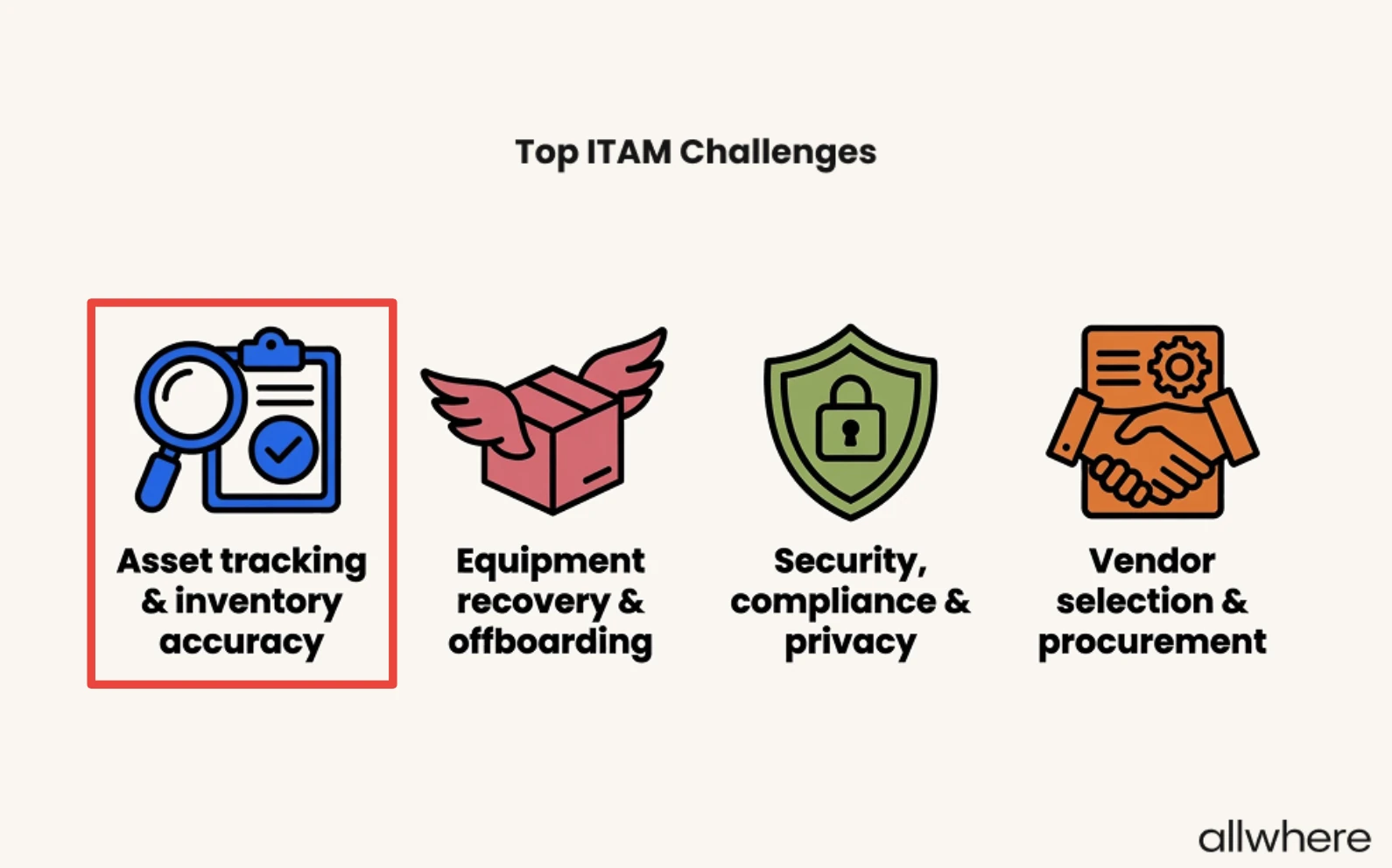
Note that asset tracking and inventory accuracy were listed as the top ITAM challenge, which again shows the importance of using a single, centralized dashboard — something that’s critical to an effective procurement strategy.
7. Security Vulnerabilities and Compliance Risks
At the end of the day, your supplier selection and procurement workflows heavily impact your level of security and compliance.
Say, for example, you choose a vendor who skimps on security, sells unsupported software, or fails to meet data protection handling standards mandated by your industry. This can create both security vulnerabilities and compliance risks that can affect your organization.
Therefore, it’s incredibly important that you establish standardized procurement policies that directly address security and compliance and only purchase from vendors that meet those requirements.
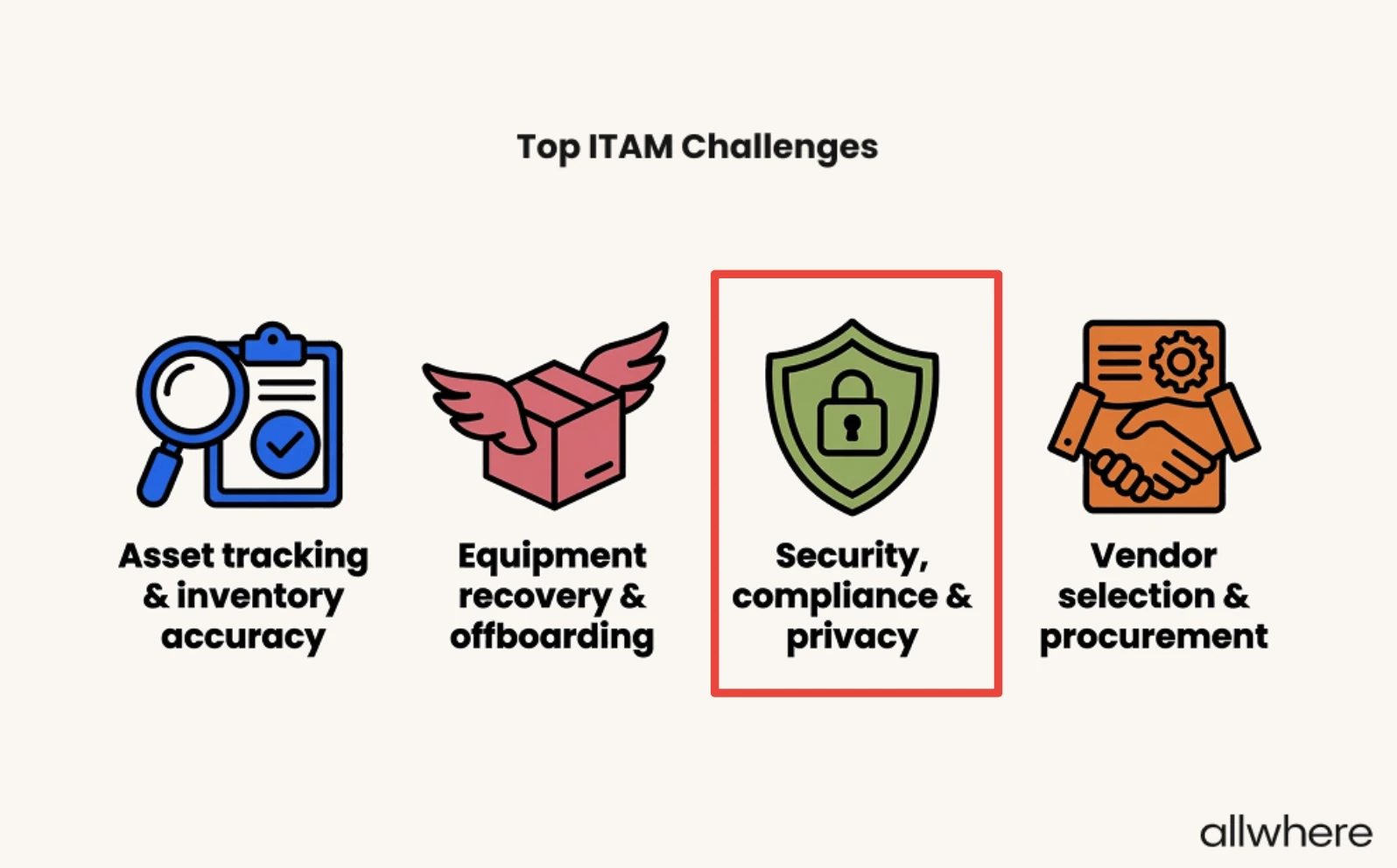
Because security and compliance are a top ITAM challenge, you should have a list of organization-approved hardware, software, cloud services, and operating systems when performing direct procurement.
You should also maintain thorough documentation from start to finish so you’re always audit-ready and continually monitor supplier performance in this area.
8. Managing Multiple Vendor Relationships
Unless you’re a tiny company with only a handful of employees, you’ll likely be dealing with several vendors in your procurement strategy.
For perspective, “the average mid-sized organization now works with between 30 and 80 technology vendors, ranging from major cloud platform providers and enterprise software firms to specialist SaaS applications, managed service providers, and hardware suppliers.”
With each supplier having its own unique services, terms, pricing, ordering policies, and support structure, a supplier relationship can get complicated in a hurry.
Once again, having a centralized platform to manage vendors from one location can be extremely helpful here. It’s also smart to consolidate vendors as much as possible, as this is part of procurement best practices.
And if your logistics and administrative work are off the charts, you could likely benefit from partnering with a third-party provider to handle supplier management and contract management for you.
9. Keeping Up with the IT Lifecycle
If you’ve been involved with the procurement lifecycle for a while, you probably know that modern tech can quickly become outdated and obsolete.
For perspective, the average business laptop lasts between three and five years...

…and laptop value follows a similar pattern.
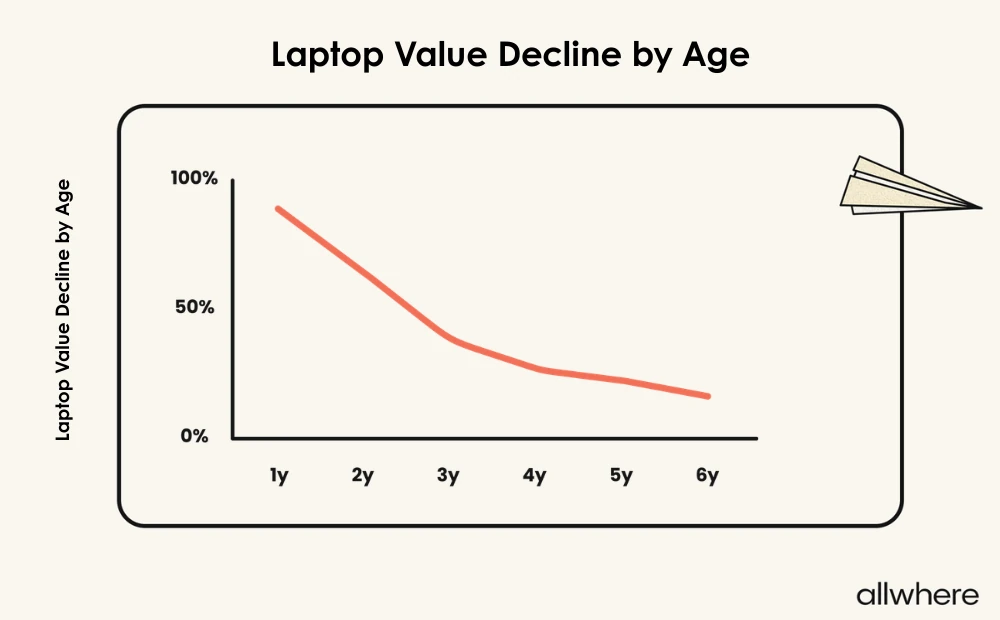
This means that keeping up with the IT lifecycle, where you have to endlessly retrieve old devices and procure new ones, can become quite exhausting for many companies.
But if you don’t stay on top of it, you’re more likely to face issues like diminished productivity because you need to make equipment repairs or replacements. You also put your organization at a greater risk of security vulnerabilities if you’re using outdated hardware and software.
One of the best ways to streamline this is to use an ITAM platform that provides a clear overview of all the assets in your IT inventory, along with info like purchase date, asset condition, scheduled maintenance, and so on.
10. Reliance on Manual Processes
If you’re still using outdated processes like spreadsheets, email threads, and manual procurement approvals, your procurement strategy efficiency is almost guaranteed to suffer.
And according to our survey, this leads to an excessive amount of time spent on ITAM for many organizations. To quantify, 25% of companies spend 11 - 20 hours per week on ITAM tasks, while 37% spend over 21 hours.
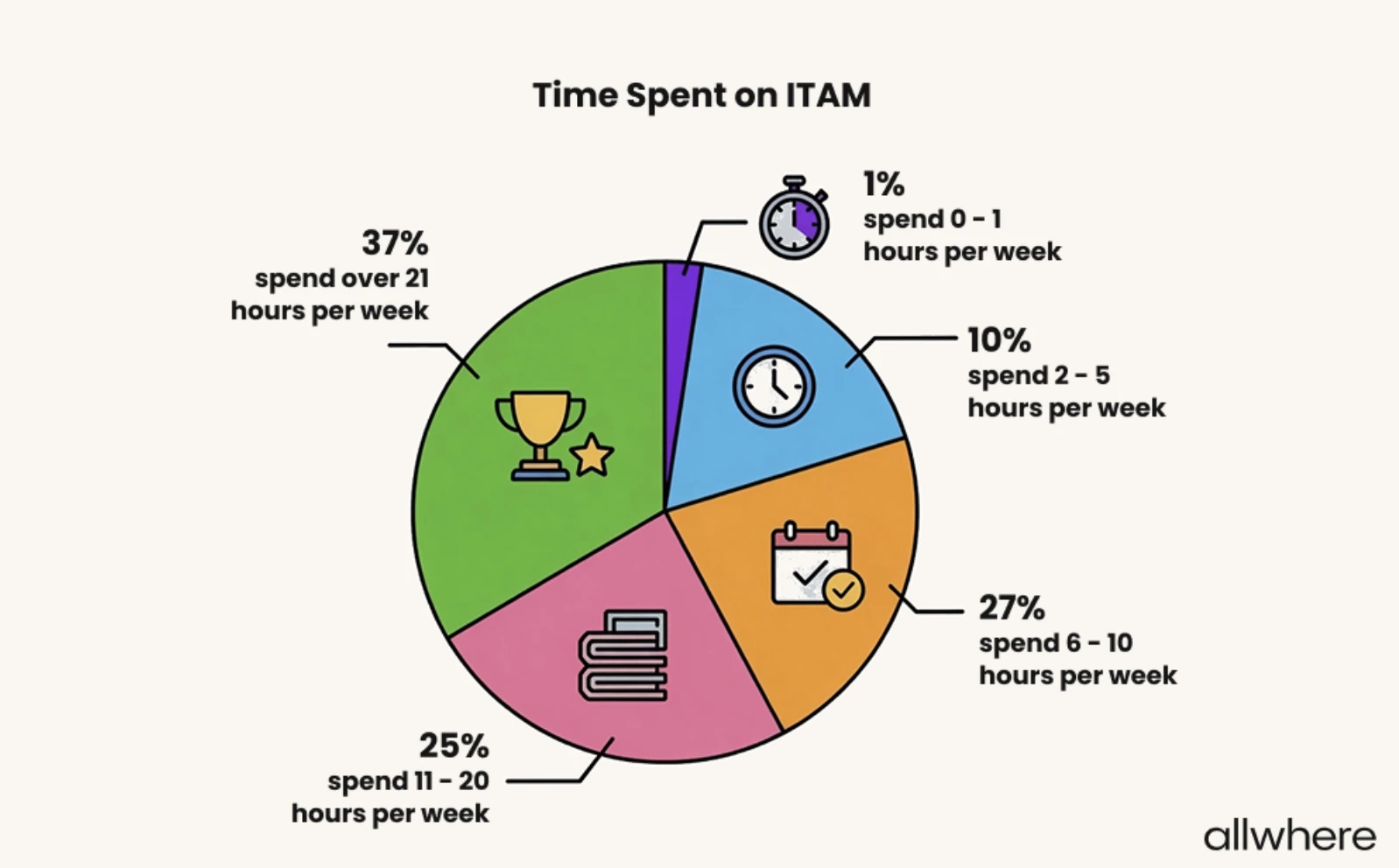
If you’re in this camp, you should seriously consider using procurement software to streamline your workflows.
With it, you can use procurement automation to avoid manual data entry while increasing accuracy, receive automated notifications for order updates and delivery status, monitor your inventory count from a centralized dashboard, and much more.
In turn, your IT team can get more done in less time, which frees up bandwidth for more important business initiatives, something that’s an integral part of IT asset management best practices.
How allwhere Simplifies IT Procurement
At this point, it’s fair to say that effective procurement comes with significant challenges. That’s why many organizations choose to outsource some or all of their procurement processes to a third-party professional like allwhere.
allwhere offers end-to-end IT asset lifecycle management, with a strong emphasis on procurement activity and supplier relationship management.
We handle the vast majority of tasks mentioned on this list and specialize in helping companies simplify their IT procurement strategy.
As we mentioned, we partner with an extensive list of reputable vendors, which makes for quick and reliable fulfillment while maintaining suppliers.
With allwhere, you can create custom kits based on your team, geography, and role that contain the exact equipment you need, whether it be desktops, laptops, mobile devices, or accessories.
We handle contract management, vendor communication, logistics, and hardware procurement tracking.
And through our centralized dashboard, you can easily track all of your IT assets from one place without having to jump from platform to platform.
To learn more, reach out to us today to schedule a 30-minute demo where we’ll discuss the specifics of your procurement process needs.
Closing Thoughts
An effective procurement strategy requires careful planning, strategic sourcing, strong vendor relationships, and ongoing adjustments as trends emerge.
By streamlining and optimizing procurement initiatives, and in some cases, using procurement services, you can put your IT team in the driver’s seat, where you control costs, reduce friction, and provide a better employee experience.
