

Article by

Topics

One platform to manage the entire IT device lifecycle
GET STARTEDArtificial intelligence has spread its tentacles into nearly every industry these days. So it should come as no surprise that AI technology is now being used in IT asset management as well.
When used correctly, AI-powered asset management can have a big impact and be the catalyst for palpable improvements in several areas.
How AI is Shaping IT Asset Management
IT asset management has always hinged upon companies managing a large volume of physical and digital assets, along with vast amounts of data.
Whether it’s physical assets like monitors, laptops, or mobile devices, software programs, or cloud-based assets like collaboration tools and SaaS platforms, organizations need to know what they have in their IT inventory, where assets are located, and ownership status.
This is true for companies of all sizes, but it’s especially true for those in enterprise asset management or those who are rapidly scaling.
It’s also helpful to monitor the condition of physical assets, determine when software updates are needed, when repairs should be scheduled, and when assets are approaching the end of their lifespan.
Implementing AI IT asset management here can be highly beneficial because it’s built to analyze vast amounts of data and provide actionable insights that an asset manager can use to make ITAM more efficient.
We’re at an exciting point in history where AI tools can be used to create more predictive, proactive, and seamless ITAM workflows and give businesses a level of intelligence that, up until recently, hasn’t been possible.
Note that AI integration isn’t about replacing asset managers. It simply allows them to fully optimize asset lifecycle management, reduce unnecessary manual tasks, improve asset performance, and make smarter decisions, which often translate into cost savings.
Key Uses of AI in IT Asset Management
1. Maximize Visibility and Simplify Inventory Management
One of the most important parts of IT asset management is building and maintaining an accurate inventory where, at a glance, you know what’s been deployed, who has what, what’s in transit, and what’s in storage throughout the asset life.
An AI system is perfectly tailored for this because it can be used to automatically discover the assets within your IT inventory, including hardware, software, and cloud resources.
AI algorithms can then organize the asset data by key categories like device type, make, serial number, assignee, and condition, and present it in an easy-to-read dashboard so you always have an accurate, up-to-date view of your inventory for greater operational efficiency.
And whenever new assets are added or old ones removed, artificial intelligence will automatically update your inventory for simplified change management.
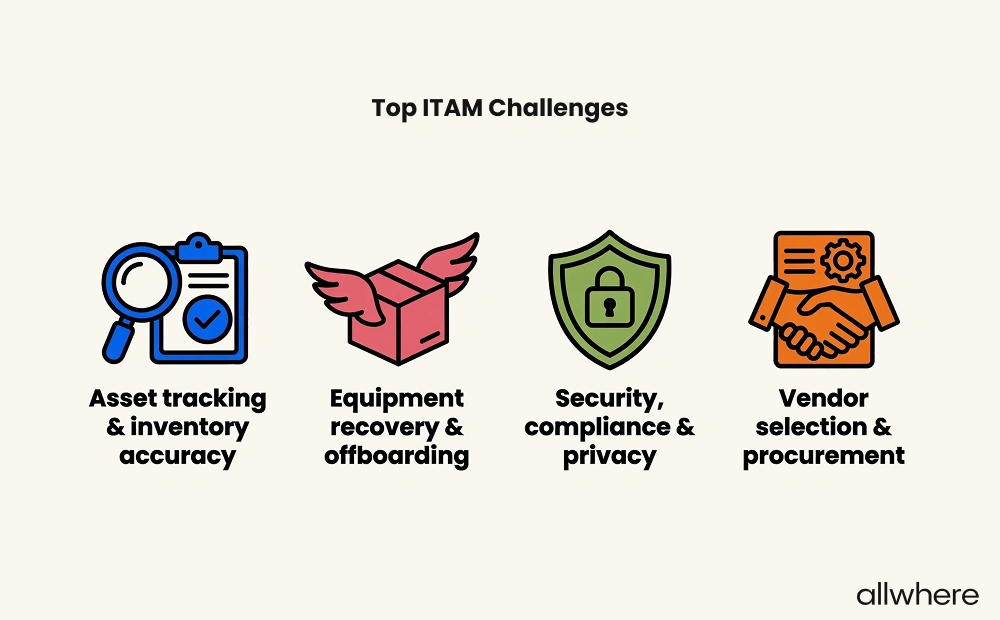
Given that asset tracking and inventory accuracy was ranked as the number one ITAM challenge in our survey, this can be an excellent AI application for many companies.
2. Streamline Predictive Maintenance and Asset Decommissioning
A huge part of increasing employee productivity and, in turn, profitability, is keeping IT assets properly maintained and ensuring aging assets are replaced before they become a problem.
For example, promptly installing new software is a critical part of optimizing laptop asset performance.
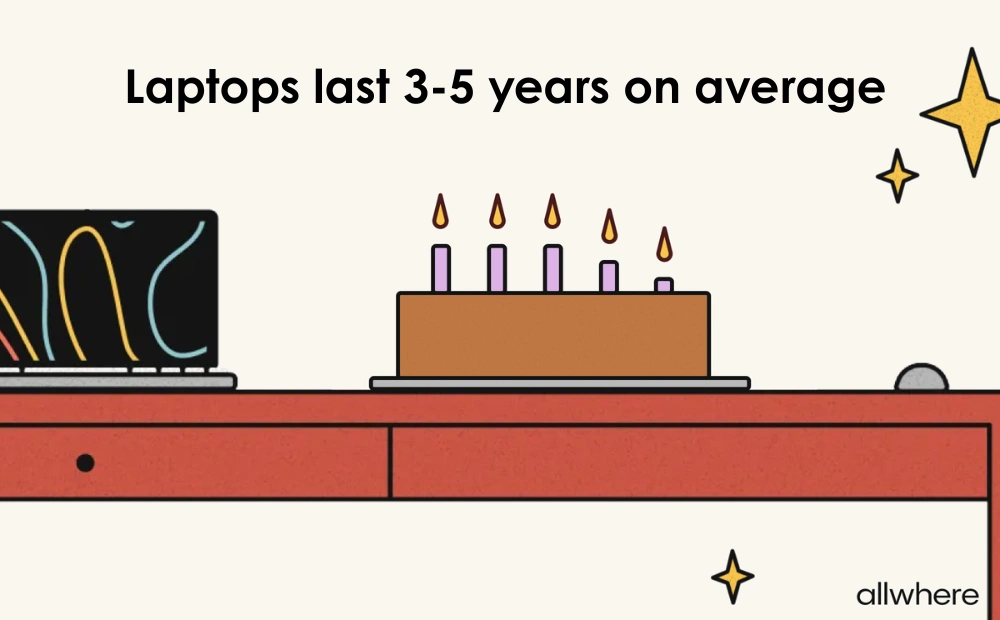
And if a laptop was approaching year three of its lifespan, it would likely be a candidate for decommissioning, as business laptops last three to five years on average.
With artificial intelligence, what would have required manual effort and meticulous planning in the past can now be easily streamlined with AI powered predictive maintenance.
For instance, for new software, you can use AI tools to take care of the updates without the need for human intervention.
You can also use AI asset management to automatically notify you when a laptop is about to reach the end of its anticipated lifespan.
3. Improve Risk Management
By risk management, we’re talking about any IT threats that could compromise security or compliance.
A classic security threat example would be using outdated hardware or software that could create vulnerabilities and open the door for exploitation.
And for compliance, this could involve remote workers using unlicensed software or failing to follow the core compliance policies outlined in your employee handbook.
Another helpful AI capability is using it to automatically notify you before hardware or software becomes outdated so you can proactively make the update.
Or, say there’s an unpatched operating system that could potentially be exploited. An AI solution can autonomously make the patch on its own or notify an IT team member to do so before there’s an elevated risk level.
4. Show Asset Utilization Patterns
The average organization may have hundreds or even thousands of IT assets in its inventory. But this doesn’t mean that all of them are being effectively utilized.
In fact, “research consistently shows that 20-30% of IT budgets are wasted on unused or underutilized assets.”
When this happens, it can lead to unnecessary waste, higher IT costs, and lower ROI.
Fortunately, this is yet another area where AI asset management can be helpful. By using AI driven insights to identify which assets are rarely being used, you can quickly pinpoint those that could use reevaluation.
For instance, after monitoring usage patterns, you could determine whether certain devices could be removed from your inventory to right-size your assets and get the most from your IT real estate.
As for impact, Gartner data found that using this type of tool can yield up to a 20% improvement in asset usage rates.
Drawbacks of AI in IT Asset Management
1. Issues with Poor Data Quality
One of the most common problems that organizations run into is having inaccurate, outdated, or incomplete data.
As Adam Sima of ITSM and ITAM company Alvao explains, “The effectiveness of AI and machine learning models in general, depends on the data on which they’re trained. Inaccurate or missing data can lead to poor predictions and recommendations.”
Say, for example, there are duplicate asset records where the same device appears twice in your inventory. An AI system would think that you own more devices than you actually have, which can throw off your inventory count.
This is exactly why you need comprehensive ITAM policies in place when using AI.
Also, it’s best to treat AI as a helpful tool that can improve asset management processes but not as something that’s infallible, which is where routine audits come into play.
2. Potential Security Concerns
Earlier, we mentioned that improved risk management was a key benefit of AI asset management, and it certainly is for minimizing things like hardware and software vulnerabilities.
But it can be a double-edged sword when you consider that the AI tool you use can potentially create its own security concerns.
Because an AI system will often have access to a large amount of sensitive company data, this creates intrinsic risks if the provider isn’t diligent about data collection safety.
Say, for example, there’s a breach where customer data is leaked. This could be disastrous if your company information was involved.
That’s why IT asset management best practices dictate that you 1) only use highly trusted AI platforms that use cutting-edge security methods and 2) be selective about how much information you give to automated systems.
The Future of AI in IT Asset Management
First, we’re basically guaranteed to see far more AI implementation in ITAM in upcoming years.
As of the time of this writing, 28% of companies are currently deploying AI in some capacity. However, 46% expect to be using it within 12 months and 87% within 24 months.
So within two years, AI will likely be ubiquitous in physical and digital asset management.
Next, we’re likely to see an increase in the use of generative AI, which should make the experience more seamless and user-friendly for organizations.
For example, rather than having to meticulously build an exhaustive report on something like device lifecycle status, you could use generative AI to ask a question like “How many laptops are three years or older?”
So without any heavy lifting, generative AI tools can give you key insights on asset performance, predictive maintenance, service management, and more.
Besides that, agentic AI should become increasingly common, where AI agents can complete more actions autonomously to minimize the need for human involvement.
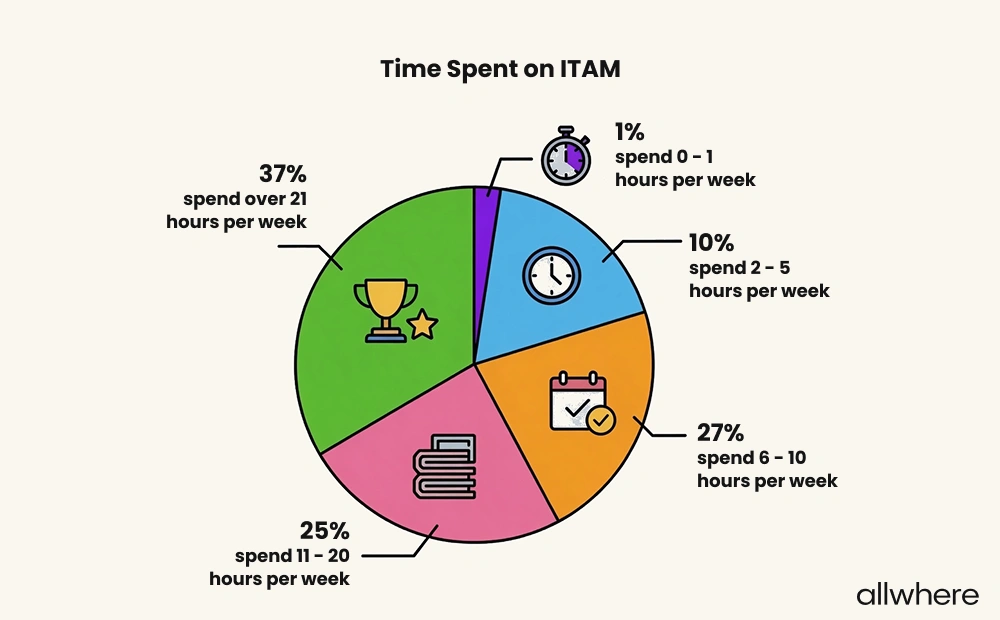
And that should be huge considering that 37% of companies spend over 21 hours per week on ITAM tasks, while 25% spend 11-20 hours.
Key Features to Look for in ITAM Tools
Start by looking for tools that offer robust asset visibility, as this is one of the most important aspects of asset management.
allwhere, for example, makes it super easy to see your entire IT inventory at a glance from a single, user-friendly dashboard. With it, you can use asset discovery to see what’s been deployed, what’s in storage, which employees have what, and much more.
And when you need to sync new assets or remove old ones, you can do it with ease.
Next, choose a platform with intuitive lifecycle management, where you can conveniently manage assets from procurement to deployment to management to retrieval.
That way, you can leverage asset tracking as it moves from stage to stage and keep everyone on your IT team in the loop.
This is another area where allwhere shines. In fact, allwhere has been rated as one of the best IT asset management companies and excels in lifecycle management.
Besides that, look for ITAM tools with solid automation features, predictive analytics, and reporting.
And finally, it’s helpful to have built-in IT asset management services that can handle the logistics and communication involved in procurement, deployment, and retrieval.
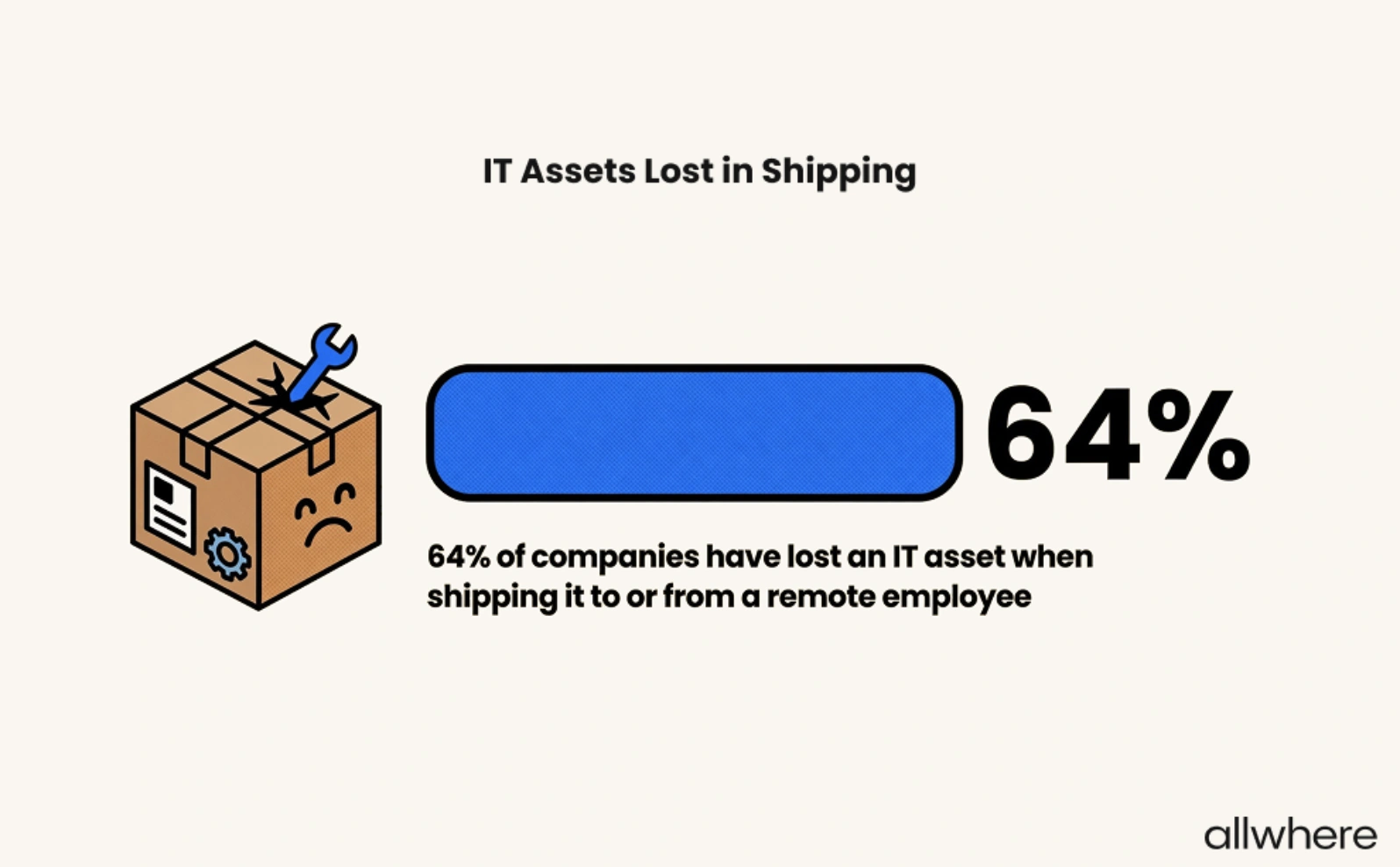
Given that 64% of companies have lost at least one asset when shipping from or to a remote employee at some point, this can take a lot of the stress out of the process and greatly increase the odds of assets reaching their intended destination on time.
Wrapping Up
AI asset management has come a long way in a relatively short time and shows no signs of slowing down. As we’ve learned, it can be incredibly powerful with tons of practical applications.
It’s just a matter of using it safely and responsibly, and right-sizing it for your business.
